Home Blog Page 15

TDA Holds Crisis Meeting Today

0

The leadership of The Democratic Alliance (TDA) has summoned its summit for a meeting to deal with the uncoordinated events that have unfolded since last week when they failed to reach consensus on a joint presidential candidate.

The meeting that will seat today (Tuesday) at TDA head offices in Naguru,Kampala will among others discuss the possibility of a ceasefire between Amama Mbabazi camp and Kizza Besigye’s camp.

The meeting that will start 10:00am will also forge a way forward on how to work together after failing on their main goal of having a joint candidate, reaching consensus on whether to field joint candidates at parliamentary and local council level and how to continue pushing for free and fair elections before the 2016 poll.

The summit is composed of member party presidents, secretary generals, youth representatives, leaders of pressure groups, two other representatives of each pressure group, a party flag-bearer where applicable, alliance eminent persons and top officials of TDA secretariat.

TDA is a coalition of opposition political parties and pressure groups seeking to wrest power from the ruling NRM at presidential and other elective positions across the country.

The TDA membership has the Democratic Party, FDC, Uganda Peoples Congress (UPC), Conservative Party (CP), JEEMA, Peoples Progressive Party (PPP), Uganda Federal Alliance (UFA), Pressure for National Unity (PNU) and Go-forward Pro-change pressure group.

NRM Voters in Mbale Stranded

0

NRM polling officials in Mbale district are stranded after the district office suddenly halted elections.

NRM was scheduled to hold countrywide elections for LC1 party flag-bearers today.

Most NRM polling officials around Mbale Municipality had reported to designated duty stations to start elections at 8:00am, but were shocked by the information from the office of NRM district registrar asking them not to hold elections.

Lawrence Okello an LC1 aspirant at Muvule cell, Namatala ward, Industrial division, says his voters were disappointed by the move.

“I had mobilised my voters and by 10:00am, people had started to turn up in big numbers only to be turned away,” Okello lamented.

The LC3 Chairperson Mutoto sub-county, Emma Watundu, said NRM supporters at his sub-county were also left stranded as they were told to wait up to 11:00 am.

The NRM postponed the LC1 elections today(Friday) morning to Monday and Wednesday. According to the party’s electoral commission chairman, Dr. Tanga Odoi, the party faced some challenges which needed to be sorted out, promising that the elections will be held on the communicated days. He said the electoral materials have already been sent to the respective areas.

EC clears Mbabazi Consultations

0

The Electoral Commission has cleared former prime minister Amama Mbabazi to go ahead with his consultative meetings in preparations for his nomination for the presidential race.

On 13th August, Amama wrote a letter to the Commission notifying it that he will be holding consultative meetings starting August 24 to September 24.

The Commission’s spokesperson, Jotham Taremwa, says Mbabazi is free to go ahead with his consultative meetings provided he abides by the Presidential  Elections Act 2005 and Public Order management Act 2013.

Meanwhile, Mbabazi’s Spokesperson Josephine Mayanja-Nkangi says they will start with Mbale District.

Uganda People’s Congress (UPC)

0

On May 14, 2010, the party elected Dr. Olara Otunnu, a former United Nations undersecretary-general for children and armed conflict, led the party.

The Uganda People’s Congress was founded in 1960 by Milton Obote, who led the country to Independence and later served two presidential terms under the party’s banner.

Obote was still party leader at the time of his death in October 2005, although he had previously announced his intention to step down.

On May 14, 2010, the party elected Dr. Olara Otunnu, a former United Nations undersecretary-general for children and armed conflict, led the party. He replaced Obote’s widow Miria.

The Uganda People’s Congress dominated Ugandan politics from independence until 1971, when Milton Obote was overthrown by Idi Amin. The party returned to power under Obote in 1980 until he was overthrown again in 1985 by Tito Okello. The history of the UPC is intertwined with the ethnic divide that has plagued Uganda since it was a British protectorate.

As Independence approached in the 1940s-1950s, it was clear that the Baganda (the largest ethnic group) wanted autonomy in Uganda, and the Buganda king’s party Kabaka Yekka (“The King Only”) emphasised this desire.

However, this was not favoured by most Ugandans of other tribes and among some Buganda educated elite who formed an alternative party, the Democratic Party, to aspire for national unity. Although unpopular in Buganda, the Democratic Party had widespread support in the rest of the Bantu-speaking South.

Into this void, there emerged an alternative – the Uganda National Congress (UNC). Although led by a northerner (Milton Obote), the UNC appeared more modernist and accommodating and attracted many people.

The UNC formed a number of alliances with other parties and emerged as the Uganda People’s Congress (UPC). The three parties (Kabaka Yekka, UPC and the Democratic Party) contested the first pre-Independence election.

As expected, Kabaka Yekka won most of the seats in Buganda and the UPC won most seats in the North and East. However, the Democratic Party (DP) led by Benedicto Kiwanuka emerged as the largest single party. Kiwanuka was on the verge of becoming the first Prime Minister of independent Uganda when he was thwarted by a surprising alliance between the UPC and Kabaka Yekka.

The Kabaka was afraid that DP would remove the Monarchy in favour of a more modern-looking Uganda. As for the UPC, Milton Obote, realising he had lost the election, saw the alliance as the way to power.

In return, Obote offered the Kabaka a ceremonial role in the new administration and the retention of all royal powers. The UPC/KY alliance thus formed Uganda’s first government with Milton Obote as Prime Minister.

The alliance between the UPC and Kabaka Yekka did not last long. After four years in power, Milton Obote ordered a military attack on the Kabaka’s palace in 1966. The Kabaka escaped to London and Obote declared himself President of Uganda.

This action, more than anything else, began the decline of the UPC as a popular party in Uganda. As his unpopularity grew, Obote increasingly turned to his Northern home support rather than trying to strengthen the party in the central and south. The 1969 elections were cancelled and Obote became dictatorial. His government was overthrown in 1971 by Idi Amin.

The UPC returned in 1979 after Idi Amin was overthrown. Obote as leader of the UPC was closely aligned to the Military Junta that had replaced Idi Amin and rather than strengthen the support of the party in the South of Uganda took up a more military approach.

The army (traditionally dominated by northerners) was a brutal machine that carried out numerous atrocities. This polarised the North/South divide with the UPC being perceived more as a northern party than ever before. Southerners turned to the Democratic Party and a smaller party called the Uganda Patriotic Movement (UPM) led by Yoweri Museveni.

In the elections of 1980, there was overwhelming suspicion that the UPC had rigged the result with the help of the Military commission of Paul Muwanga.

This perception was further enhanced when Obote appointed the head of the Military Junta, Paulo Muwanga as his Vice-President when the UPC was declared the winner of the elections. A war broke out in Uganda when Yoweri Museveni rejected the result and went to the bush to fight the government.

When Museveni came to power in 1986, he suspended political party activities and Uganda was placed under the broad-based Movement system. Political parties returned in 2005 after a referendum that allowed them to operate legally.

On November 28, 2005, Obote’s widow Miria was elected party president. Miria Obote was UPC’s presidential candidate in the 2006 general election.

Milton Obote had died in exile a few months before. The UPC’s traditional heartland in the North appeared uninterested in the UPC without Obote, but still opposed Museveni. This time they turned to Museveni’s main opponent Kizza Besigye who led the Forum for Democratic Change (FDC).

After the elections, the party suffered many high level defections to Museveni’s ruling National Resistance Movement and to the FDC. These included former senior party officials Badru Wegulo and Henry Mayega who joined the NRM.

The UPC’s poor performance in the 2006 elections forced the party to review its place in Ugandan politics. Uganda’s political landscape is changing from regional based parties to personality driven politics.

The party needed to find a leader with a recognised calibre in politics. The party chose Dr. Olara Otunnu, a former UN undersecretary general for children and armed conflict. The election, however, revealed internal conflicts in the party. Otunnu served under Tito Okello as Foreign Minister and was seen by some as part of the putsch that overthrew the last UPC government in 1985.

Otunnu’s main rival at the party elections was Milton Obote’s son Jimmy Akena, the Member of Parliament for Lira Municipality showing the Obote family still cherishes the party that Obote created.

The party has now been embroiled in wrangles and leadership struggles between Otunnu and Akena, with the latter being declared as the new president of the party, while Otunnu and some officials dismiss the claims.

As the party gears up for the 2016 elections, there is still uncertainty on who will carry their flag.
Justice Forum (JEEMA)

0

The Justice Forum, commonly known as Jeema, is one of Uganda’s leading opposition parties, with representation in Parliament.

Its “Jeema” acronym stands for: Justice, Education, Economic Revitalization, Morality and African Unity.

Though political parties were not operational until 2005, Jeema managed to emerge in 1996 and fronted a presidential candidate in the same year and in 2001.

Muhammad Kibirige Mayanja, who represented Jeema in both elections, led the party until 2010 when he handed over to Asuman Basalirwa, 33, the youngest party president in Uganda’s history.

Jeema hit the road with huge support among the country’s Muslim population, however, its growth stagnanted when some of its supporters were suspected to have links with the Allied Democratic Force rebels who operated in western Uganda.

Recently, however, Jeema started experiencing a trend of revival, establishing a functioning Secretariat and intensifying nationwide mobilization ahead of elections. Its only Member of Parliament is Hussein Kyanjo of Makindye East in Kampala.

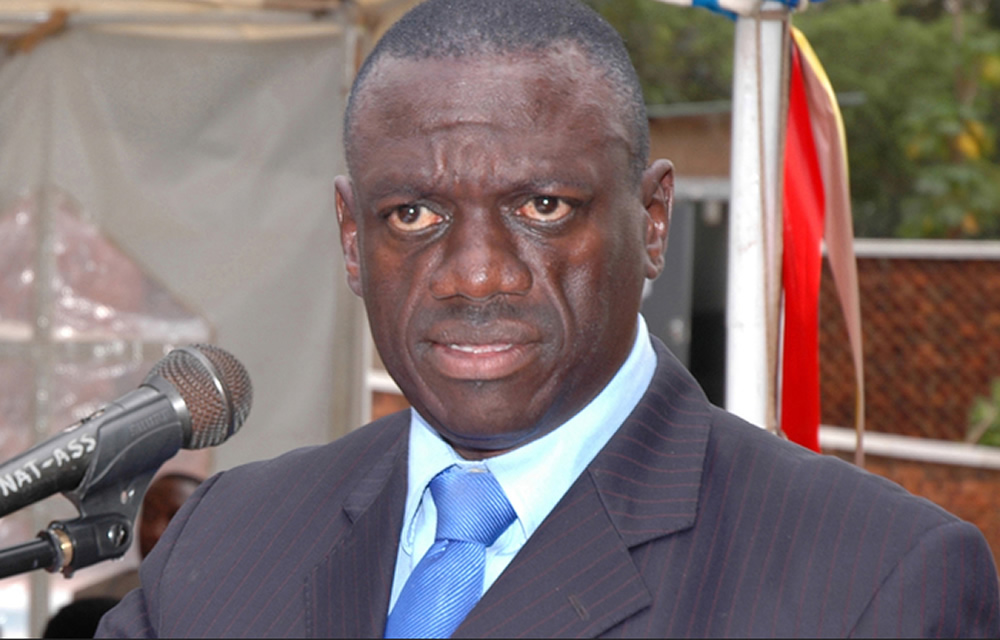
Besigye Kifefe Kizza

0
Kizza Besigye Kifefe

Dr. Col. (rtd) Kizza Besigye will always be remembered for leading a party that became the first real opposition of the ruling National Resistance Movement (NRM) just when multiparty democracy had been re-introduced in Uganda in 2005.

He has stood against Yoweri Museveni three times, and lost every time. The first time he contested was in 2001 under the no-party (Movement system) era, the second time was in 2006 under the first multiparty election and the third in 2011.

Besigye is married to former politician but now executive director of Oxfam, Winnie Byanyima and they have one child, a son called Anselm.

Besigye was born in 1955, the second child in a family of six, whose parents died when he was still in primary school. He had his primary education at Kinyansano Primary School and Mbarara Junior School. Then he joined Kitante High School for his O’levels and Kigezi High School for his A’levels. In 1975, he joined Makerere University and graduated with a medical degree in 1980. He worked briefly at Mulago and Aga Khan hospitals in Kampala and Nairobi, before he joined Museveni’s liberation struggle.

Besigye was a member of the Uganda Patriotic Movement (UPM), formed to contest the 1980 elections with Museveni as party leader and presidential candidate. He had just graduated with a medical degree from Makerere University.

When Museveni rejected the election results, formed the Popular Resistance Army (PRA), and started a guerrilla war against the Obote II government, Besigye joined them after he was detained and tortured by security agents of the day.

After the NRA came to power in 1986, Besigye, then 29 years old, was appointed state minister for internal affairs, and later state minister for defence and the National Political Commissar. Between 1991, when he became Commanding Officer of the Mechanised Regiment in Masaka, and 1999 when he retired from the army at the rank of Colonel, he had also served as the chief of logistics and engineering, and a Senior Military Adviser to the Ministry of Defence.

Besigye who became increasingly critical of the Movement’s workings had a run in with army authorities before he was allowed to leave the army in 2000.

After the 2001 elections, Reform Agenda was merged with a number of smaller pressure groups that had emerged opposing the government, to form the political party Forum for Democratic Change (FDC). Headquartered at Najjanankumbi, FDC has gone on to become the country’s largest opposition party, with the biggest number of opposition MPs in Parliament since 2006.

After his loss in 2011 Besigye swore he would never compete again, stepping down as President of FDC. But in 2015 he had a change of heart and is canvassing for support to become FDC’s presidential flag bearer yet again.

Mao Nobert

0
Nobert Mao

Mao is a Ugandan politician and lawyer, who has been a politician from his student days at Makerere University. He has been president of the Democratic Party since 2010, the oldest party in the country, formed in 1954.

Mao, who was born on March 12, 1967 to an Acholi father and Munyankole mother, attended Mwiri Primary School, in Jinja, and briefly went to Wairaka College, in Jinja district, before attending Namilyango College in Mukono district. He went to Makerere University between 1988 until 1991, graduating with a law degree. He served as the president of the Makerere University Students Guild between 1990 and 1991. He went on to obtain the Diploma in Legal Practice from the Law Development Centre in 1992. In 2003, Mao was admitted to Yale University, under the university’s World Fellows Program, where he spent one year at the New Haven, Connecticut campus.

From 1992 until 1994, Norbert Mao worked as an Associate Attorney with Kabugo and Co. Advocates, a Kampala-based law firm. Between 1994 and 1996, he worked as Legal Counsel of the Legal Aid Project of the Uganda Law Society, in their Gulu office. In 1996, he was elected Member of Parliament representing Gulu Municipality. He left parliamentary politics in 2006 and was elected chairman Gulu district, where he served up to 2011.

Mao has been outspoken opposition politician, both in Parliament and local politics. He rose at a time when the region was embroiled in a war orchestrated by Joseph Kony, which ravaged the region for over two decades. He was instrumental in trying to bridge the gap between the Lord’s Resistance Army (LRA) rebels and the government by lobbying for the passing of a general amnesty law. This was aimed at bringing a peaceful solution to the war that had pushed more than a million people in displaced people’s camps.

He was elected as president of the Democratic Party on February, 20, 2010, which propelled him to running for president in the presidential elections of 2011. However, just before the general elections, the party faced challenges, which led to a split and deep polarization. He attracted only a small share of the vote. Mao and presidential candidates; Kizza Besigye and Olara Otunu contested the election results in spite of its early approval by international observers and the US as largely free and fair.

He has been involved in efforts to try to reconcile the party that got divided months before the 2011 elections.

Bidandi Ssali Jaberi

0

The veteran politician and businessman has been in the political sphere since the pre-independence political struggles. He is the founder of the People’s Progressive Party.

Having served the government of President Yoweri Museveni from 1989 to 2004 as local government minister, Ssali started his own party and contested in the 2011 presidential elections.

Born in 1937 and perhaps the oldest candidate in the race, his performance in the elections was poor and his political activity has been minimal.

Ssali attended elementary schools in Butambala before joining Kibuli and Nyakasura schools. He later went to Pakistan to pursue a degree in agriculture, which he abandoned before graduation. He holds the degree of Bachelor of Arts in Local Governance and Human Rights, obtained from Uganda Martyrs University.

At the time of Uganda’s Independence in 1962, Bidandi Ssali was a mobilizer for the Uganda People’s Congress (UPC), led by Milton Obote, Uganda’s first Prime Minister. During the regime of Idi Amin, he turned his focus to football, coaching Kampala City Council (now Kampala Capital City Authority) FC from 1974 until 1979. For a period of about 60 days in 1978, Ssali was the team coach for the Uganda National team, The Cranes, the year they made it to the African Cup of Nations finals against Ghana.

In the 1980 general elections, Ssali was one of the promoters of the Uganda Patriotic Movement (UPM) led by Yoweri Museveni. However, the UPC won the contested elections prompting Museveni to go to the bush to fight the government.

Ssali did not did join Museveni in the bush, clandestinely offered assistance to the National Resistance Army rebels. When Museveni came to power in 1986, Ssali was one of the officials who joined him, later becoming the local government minister in 1989.

In 2004, Ssali resigned from Cabinet after disagreeing with some government officials over a constitutional amendment to allow Museveni contest for a third term of office in the 2006 general elections.

The Constitution was amended and a limitation on the term limits on the President was lifted, which allowed Museveni to contest in the subsequent elections.

Olara Otunnu

0
Olara Otunnu

Otunnu is a politician, diplomat, and lawyer. He was elected president of the Uganda People’s Congress (UPC), a political party in 2010 and contested as the party’s candidate in the 2011 presidential election. |

Although many party faithful saw his coming as a blessing given his international diplomatic reputation, his performance in the elections was poor, with only 1.58% of the valid votes. He was also accused of failure to vote in an election where he was a candidate for the highest office in the land.

Otunnu defeated Jimmy Akena in the UPC elections to succeed Miria Obote, wife of former President Milton Obote.

Otunnu was Uganda’s Permanent Representative to the United Nations from 1980 to 1985 and served as Minister of Foreign Affairs from 1985 to 1986. Later, he was President of the International Peace Academy from 1990 to 1998 and he was an Under-Secretary-General of the United Nations and Special Representative for Children and Armed Conflict from 1997 to 2005.

Otunnu, who was born in Mucwini, Kitgum district, received his early education at Mvara, Mucwini, and Anaka primary schools. He went to Gulu High School and King’s College Budo, before proceeding to Makerere University, Oxford University and Harvard Law School.

Otunnu was appointed by United Nations Secretary-General Kofi Annan as Special Representative for Children in Armed Conflict in 1997.

Otunnu’s problems started in 2011, when Otunnu hastily sacked a group of senior party leaders who were critical of his leadership style.

They included the then party chairman Edward Rurangaranga, secretary general John Odit, and David Pulkol, the former director of research in Otunnu’s executive.

Otunnu also failed to forge a harmonious relationship with the Obote family and other senior party supporters. The family and officials accuse him of betraying Dr. Milton Obote when he (Otunnu) decided to join the government of Tito Okello Lutwa in 1985 that had overthrown the former UPC president.

Early this year, Otunnu resigned as UPC president, saying he was stepping aside to concentrate on political activism. “We must bring change to the country and I am not giving up on politics,” Otunnu told journalists at the party headquarters.

Abed Bwanika

0
Abed Bwanika

Abed Bwanika combines different backgrounds into one fold. He is veterinarian, politician and pastor. The 48-year-old is the president of the People’s Development Party.

He hails from Lwengo district and attended Kimwanyu Primary School, Masaka Secondary School and at Kigezi High School before proceeding to Makerere University where he pursued Veterinary Medicine. He was later awarded the degree of Master of Science in the same field, from the same university.

After his first degree, he stayed at Makerere University as a graduate tutor, while he conducted research and pursued a second degree. In 2001, he left teaching and opened a church, Christian Witness Church.

During the 1996 presidential elections, he supported Yoweri Museveni, but switched allegiance to Kizza Besigye in 2001. He ran as an independent candidate in the February 2006 presidential election, where he garnered 65,874 votes (0.95%).

Despite his numerous appearances in public and in the media, he got 14,000 votes less when he contested again in the 2011 elections compared to what he had got in 2006.

Abed Bwanika is married to Gladys Namusuwe, a fish biologist and lecturer in the Department of Zoology at Makerere University. The have been married since 1995 and have three sons; Wise, Chosen and Delight.

Democratic Party DP

0
The Democratic Party was founded by seven revolutionary Catholics to fight for Uganda’s Independence and national unity. They were the products of the famous Catholic...

National Resistance Movement (NRM)

0
The National Resistance Movement (NRM), commonly referred to as the Movement, is the ruling political organisation in Uganda. It has over 263 legislators in the...

Candidate Promises to Scrap Parking Fees

0
The Rukungiri Municipality NRM flag-bearer for Rukungiri mayor, Geoffrey Tindarwesire Kenzigye, has vowed to scrap parking fees once elected mayor to encourage residents own...
Uganda Presidential Election Results

2026 Uganda Elections Results

0
The Electoral Commission on Saturday (January 17) has released the 2026 Uganda presidential election results. Shortly after 4pm, EC chairperson Justice Simon Byabakama delivered the...
President Yoweri Kaguta Museveni

President Yoweri Museveni Wins Seventh Term: Electoral Commission

0
Uganda’s President Yoweri Museveni has been re-elected to a seventh term, the Electoral Commission has announced. Museveni, 81, won with 71.65 percent of the vote,...
Kyagulanyi Ssentamu Campaigns in Kisoro

NUP’s Kyagulanyi Decries Slow Pace of Development in Kisoro and Rubanda

0
The NUP Presidential Candidate Robert Kyagulanyi has campaigned in Kisoro and Rubanda Districts of Western Uganda. He started the day with a radio talk...

Registered Political Parties

0
As of September 2025, the Uganda Electoral Commission lists 26 registered political parties on its website. Some of the listed parties include the following:

Forum for Democratic Change (FDC)

0
The Forum for Democratic Change (FDC), founded on December 16, 2004, is one of the top opposition parties in Uganda. FDC was founded as an...

President Museveni Campaigns in Adjuman

0
EC does not rig for me Museveni also commented on concerns by the Opposition that the Independent Electoral Commission is biased. Museveni said that although he...

Nominations: EC Outlines Guidelines for Candidates

0
The Electoral Commission on Tuesday issued fresh guidelines for the process of the nomination of candidates for the Parliamentary elections that starts today. Candidates heading for nominations...