Home Blog

Democratic Party DP

0

The Democratic Party was founded by seven revolutionary Catholics to fight for Uganda’s Independence and national unity.

They were the products of the famous Catholic schools: Namilyango College, St. Mary’s College Kisubi, St. Henry’s College Kitovu and St. Peter’s Secondary School Nsambya.

They were Joseph Kasolo who was the founding President General, Joseph Kasule, founding Secretary General, S.B Kibuuka, A.B Serubiri, L.M Tyaba, M. Kiddu and Alphonse Ntale. The Democratic Party was founded on October 6, 1954 at Rubaga, a Kampala city suburb. The party is the second oldest political party in Africa after the African National Congress (ANC) of South Africa which was founded by Albert Luthuli and others in 1912.

Currently DP has 15 members of Parliament who include the fiery “iron lady” Betty Nambooze who represents Mukono Municipality and the preacher of “truth and justice” Mohammed Muwanga Kivumbi of Butambala County.

The strongest base of the Democratic Party right now is Buganda. This is where it was founded. However, the party under Nobert Mao from Acholiland, embarked on a vigorous and aggressive campaign to regain grassroots support and membership in Parliament in Ankole, Kigezi, Acholi, West Nile Madi, Busoga, Busia, Bugisu and other areas of Eastern Uganda. In the olden days; at the time of Uganda’s Independence, those were the areas were the Democratic Party was very strong, where DP got many Members of Parliament.

In 1961, the Democratic Party won overwhelmingly outside Buganda and Ben Kiwanuka who was the leader of DP at that time, formed the internal self-government and became the first Prime Minister of Uganda.

The situation only changed in 1962 after the approval of the Independence Constitution in London and Buganda kingdom’s decision to enter directly into the party politics of Uganda. Milton Obote then shrewdly worked with Buganda and his party; the Uganda People’s Congress (UPC), acquired a majority in Parliament because of the 21 Buganda MPS who were nominated by the Buganda Lukiiko. In 1966, Obote outlawed political parties and arrested DP leader Benedicto Kiwanuka.

When Obote was overthrown in 1971 by Idi Amin, Benedicto Kiwanuka accepted a ministerial post in the new government. He was eventually murdered by Amin’s agents. All political parties were banned in Uganda during Idi Amin’s rule.

The Democratic Party emerged again after Idi Amin was overthrown in 1979. The absence of the Kabaka Yekka party now made the Democratic Party the main political force in Buganda and Southern Uganda, while the UPC consolidated its support in the north.

The new leader Paul Ssemogerere provided a significant challenge to the UPC led once again by Milton Obote in the 1980 elections. These elections are widely believed to have been rigged by the Military Junta that ruled Uganda after Idi Amin in favour of Milton Obote and the UPC.

There was pressure on the Democratic Party to reject the result, but the leadership decided to take their seats in parliament much to the disappointment of their supporters. However one of Democratic Party’s younger leaders Andrew Kayiira did take up arms to fight the new government, joining an organisation called Uganda Freedom Movement.

When Yoweri Museveni took over power in 1986, the party activities were suspended and most of the party officials joined the new National Resistance Movement to form a national government. DP leaders such as Kisamba Mugerwa, Maria Mutagamba and Paul Ssemwogerere were in Museveni’s cabinet.

However, in 1996, Ssemwogerere resigned his cabinet position to challenge Museveni in the presidential elections. He got only 23.6% of the vote against Museveni’s 74.3%.

After the 2005 referendum that allowed parties to operate freely, DP started mobilizing again and took part in the 2006 general elections. However, it leader John Ssebana Kizito got only 1.59% of the vote.
National Resistance Movement (NRM)

0

The National Resistance Movement (NRM), commonly referred to as the Movement, is the ruling political organisation in Uganda.

It has over 263 legislators in the 9th Parliament. Also, more than 70 of the 112 districts of Uganda are headed by chairmen who belong to the NRM party.

Until a referendum in 2005, Uganda held elections on a non-party basis. The NRM dominates Parliament, with majority of representatives. The presidential elections of March 12, 2001 were won by Yoweri Museveni of the NRM with 69.3% of the popular vote. It began as the political body associated with the rebel National Resistance Army before Museveni came to power in 1986.

On November 17, 2005, Museveni was elected unopposed as NRM’s presidential flag-bearer for the 2006 elections.

In the general election of February 23, 2006, the party won 205 out of 289 elected seats. In the presidential election of the same date Museveni won 59.3% of the vote.

Museveni was involved in the war that deposed Idi Amin, ending his rule in 1979, and in the rebellion that subsequently led to the demise of the Milton Obote regime in 1985. The NRM has been praised for bringing stability and economic growth to a country that has endured decades of government mismanagement, rebel activity and civil war.

The National Resistance Movement’s history begins after the overthrow of Idi Amin by an alliance of Ugandan exiles and Tanzanian forces in 1979. The factions that formed the alliance of exiles included former military officers like Tito Okello from the previous government of Milton Obote which Idi Amin had overthrown in 1971.

It also included a younger group of fighters including Yoweri Museveni of Front for National Salvation (FRONASA), Buganda nationalists of the Uganda Freedom Movement (UFM) and the federalist Federal Democratic Movement of Uganda (FEDEMU) forces. These forces came to power in Uganda under the banner of the Uganda National Liberation Front (UNLF). A political figurehead Yusuf Lule was appointed leader and president of Uganda, but had very little political or military power.

Each faction quickly began an extensive recruitment campaign to strengthen their forces. The UFM particularly attracted a lot of support from Buganda, Uganda’s largest ethnic group, which aspired for an autonomous status in Uganda. The years of Idi Amin and northern dominance of the military had galvanised many southerners, particularly the Baganda into realising that they had to take up arms to achieve their political ambitions. The UFM played on this feeling.

In the capital city, Kampala, the UFM and FEDEMU forces established themselves and there were many clashes with the core UNLF. There was also the feeling within the UNLF that president Yusuf Lule (from Buganda) was in subtle alliance with these forces. The ruling body within the UNLF, the National Consultative Commission (NCC), which included members of other factions, began clashing with the president and on June 20, 1979, the NCC forced Yusuf Lule out of office and replaced him with Godfrey Binaisa (another Muganda).

Demonstrations erupted in Kampala, and there was the suspicion that these were being fuelled by the UFM and FEDEMU forces. In response, the UNLF government became more brutal. Gunfire erupted in the city to disperse the demonstrations, the UFM and FEDEMU were confronted and their leaders forced into exile.

Paulo Muwanga and Oyite Ojok began to plot the return of Milton Obote to power. In response the president, Godfrey Binaisa announced that Oyite Ojok had been dismissed. Within days Godfrey Binaisa was overthrown and the Military Commission, which included Oyite Ojok, Tito Okello Lutwa, Paulo Muwanga and Yoweri Museveni, assumed power. Muwanga and Ojok began to speed up their plans to return Milton Obote to power by announcing an election date. Okello was less enthusiastic but being less articulate played a passive role. Yoweri Museveni however finally split from the Military Commission to form his own political party, the Uganda Patriotic Movement (UPM).

In 1980, Yoweri Museveni stood against Milton Obote’s Uganda People’s Congress (UPC) and the Democratic Party in the national elections. Museveni’s UPM gained only one parliamentary seat in what was widely seen as an election rigged in favour of Obote’s UPC. Museveni rejected the result and went to the bush to fight a guerrilla war.

Museveni’s action made him extremely popular, particularly as the Democratic Party which took up its seats in Parliament was perceived as increasingly irrelevant. The undisciplined army continued its atrocities under Obote’s government and Paulo Muwanga (Vice-President), Tito Okello (Commander of the Army) and David Oyite-Ojok (Army Chief of Staff) had all been rewarded by Obote. The army responded by carrying out a brutal campaign in the central, particularly Luwero district where Museveni’s forces were based.

Museveni proved to be an astute politician, and quickly formed an alliance with Buganda resistance groups such as the Uganda Freedom Fighters of Yusuf Lule and the remnants of Idi Amin’s army in the Uganda National Rescue Front led by Moses Ali. The alliance emerged as the National Resistance Movement (NRM) with its military wing the National Resistance Army (NRA). Museveni moulded the NRA into a formidable and disciplined fighting force. Its main method of operation was small strikes at military and government installations and then melting away. In response the government army would brutalise civilians around the place of attack thus further alienating them.

Although there were other guerrilla armies fighting the government, such as the Uganda Freedom Movement led by Andrew Kayiira, Museveni had super abilities in command and mobilisation.

The NRA overthrew Okello Lutwa on January 26, 1986, with Museveni assuming the presidency. The National Resistance Movement embarked on a Marxist-oriented approach to government, establishing a ‘no-party’ democracy, cadres, and local resistance councils.

Museveni began a pragmatic turn around in vision. To appease the Baganda he re-instituted the Kabaka and other royal palaces, promoted economic liberalisation and established himself as more of a civilian politician than a guerrilla leader. The NRM began to widen its appeal by emphasising its role in establishing security and maintaining a disciplined army.

The NRM also courted influential members from Idi Amin’s tribe like Moses Ali. The NRM also encouraged free trade and stimulated rapid economic growth thus attracting the support of the affluent middle class while retaining favour in rural areas by ensuring law and order. The rural areas particularly in Buganda had suffered years of terror under Obote.

The party has maintained the grip on power and control over Parliament, most local councils and special interests groups such as workers, youth, women and the disabled.

There are however, criticisms of corruption, rubberstamping Parliament and using power and security forces to gain an upper hand over other political parties. Even in the south where it has enjoyed massive support since its formation, there is resentment over the dominance of people from the west in most key positions in the party and government institutions.

Museveni’s iconic stature and economic progress in the west and central, however, are closely related to the NRM. Museveni and his party remain popular as the country heads for the 2016 elections.

Candidate Promises to Scrap Parking Fees

0

The Rukungiri Municipality NRM flag-bearer for Rukungiri mayor, Geoffrey Tindarwesire Kenzigye, has vowed to scrap parking fees once elected mayor to encourage residents own cars.

Tindarwesire said this on Thursday during NRM flag-bearers joint rally at Maaya and Katobo trading centres in Kitimba ward, western division.

He said the municipality has many sources of revenue, that it was not necessary to introduce another tax since it is still a young municipality.

Parking fees was introduced in Rukungiri Municipality beginning January 2016 as source of local revenue a move that NRM aspirant for mayor opposed.

“There was introduction of property tax few years ago and up to now, most landlords have failed to pay it and those who paid its accountability is not seen, it was not in order to introduce another tax,” said Tindarwesire.

However, the town clerk Andrew Otim said municipal council introduced parking fees as the way of getting local revenue like other municipalities are doing. He said council expects to get total revenue of sh60m annually as they are beginning. He added that council proposed sh300 as parking fee per hour.

Tindarwesire said parking fees discourages residents to buy cars and already those with cars have begun selling them off while others have resorted to leave cars at home and foot whenever they are going to town.

He added that when elected mayor he will introduce a programme called ask the mayor as the way of giving accountability to tax payers that will be organised at least monthly.

Tindarwesire denied allegations that defunct Kigezi coffee growers collapsed in his hands as manager, saying he was a mere worker but not among those responsible for making decisions.

Meanwhile, the MP aspirant Dr. Elias Rutahigwa urged people of Kitimba to forget the differences that came up during the past NRM primaries and vote for only NRM flag-bearers.

“When President Museveni was campaigning here early this month, he told us that we can only succeed as a party if we put our support together on only flag-bearers, lets’ follow the president’s advice if we are to succeed,” he said.

Rutahigwa added that Museveni was complaining that he supported the creation of Rukungiri Municipality to develop it but was disappointed for electing a person who cannot sit with him in a caucus where they share the national cake from.

Seven candidates were nominated for Rukungiri municipality MP seat however, two of them have since withdrawn from the race leaving only five candidates in the race.

They are incumbent Rolland Mugume of FDC, Elias Rutahigwa of NRM and independents, Eliasaph Kakwateki, Francis Musimire, and Apollo Kabano.

2026 Uganda Elections Results

0
Uganda Presidential Election Results

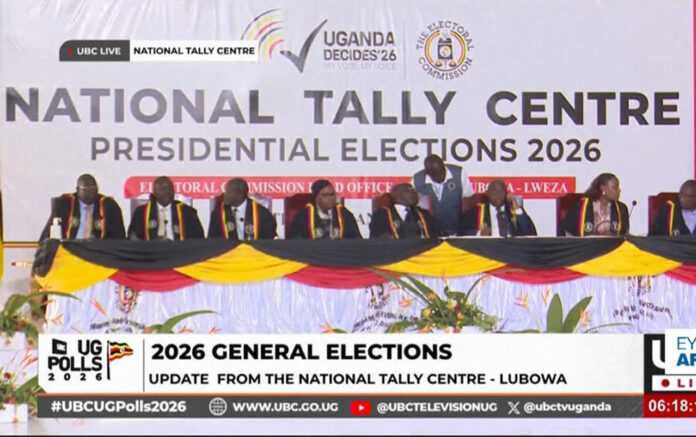
The Electoral Commission on Saturday (January 17) has released the 2026 Uganda presidential election results.

Shortly after 4pm, EC chairperson Justice Simon Byabakama delivered the final results at the National Tally Centre (EC head office premises) in Lubowa, Lweza.

Of the 11,366,201 total number of votes cast (52.50% of the registered voters), 275,353 of them ((2.42%) were invalid votes.

Here are the votes that each candidate has received, as announced by EC boss Byabakama as provided for by Article 103(3) of the Uganda Constitution and Section 59 of the Presidential Elections Act:

▪️ Yoweri Museveni of the National Resistance Movement (NRM): 7,946,772 votes (71.65%)
▪️ Robert Kyagulanyi Ssentamu of the National Unity Platform (NUP):  2,741,238 votes (24.72%)
▪️ James Nathan Nandala Mafabi of Forum for Democratic Change (FDC): 209,039 votes (1.88%)
▪️ Gregory Mugisha Muntu of Alliance for National Transformation (ANT): 59,276 votes (0.53%)
▪️ Frank Bulira Kabinga of Revolutionary People’s Party (RPP): 45,959 votes (0.41%)
▪️ Robert Kasibante of the National Peasants Party (NPP): 33,440 votes (0.30%)
▪️Mubarak Munyagwa of Common Man’s Party (CMP): 31,666 votes (0.29%)
▪️Joseph Mabirizi of the Conservative Party (CP): 23,458 votes (0.21%)

President Yoweri Museveni Wins Seventh Term: Electoral Commission

0
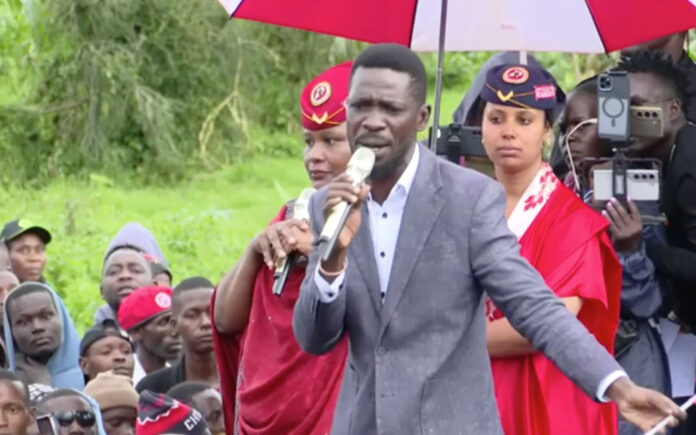
President Yoweri Kaguta Museveni

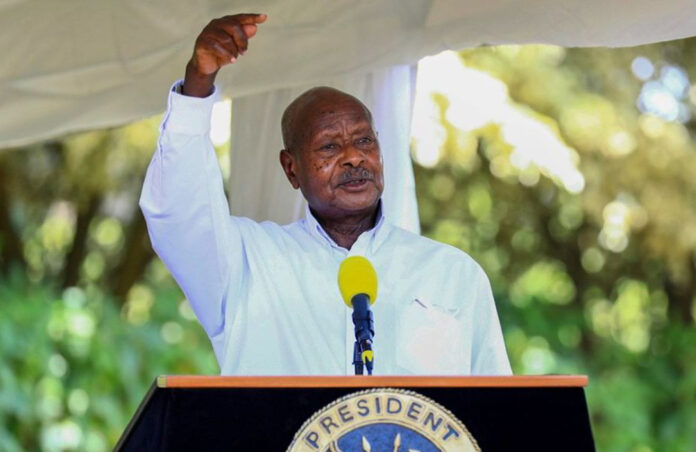
Uganda’s President Yoweri Museveni has been re-elected to a seventh term, the Electoral Commission has announced.

Museveni, 81, won with 71.65 percent of the vote, the commission said on Saturday.

The Electoral Commission on Saturday (January 17) has declared President Yoweri Museveni of the National Resistance Movement (NRM) the winner of the 2026 presidential election after securing 7,946,772 votes.

Shortly after 4pm, EC chairperson Justice Simon Byabakama delivered the final results at the National Tally Centre (EC head office premises) in Lubowa, Lweza.

He defeated his main challenger, 43-year-old Bobi Wine, who received 24.72 percent of the vote, according to the official results.

Museveni’s widely expected victory comes after an election campaign that the United Nations said was marred by “widespread repression and intimidation”, including a crackdown on opposition rallies.

President Yoweri Kaguta Museveni, has been in power since 1986 and he is the longest serving president of Uganda.

Many Ugandans still praise the longtime leader as the man who ended Uganda’s post-independence chaos and oversaw rapid economic growth in the country.

“I’m really very happy to see he’s won,” said Isaac Kamba, a 37-year-old teacher at a pro-government rally in a Kampala cricket ground.

“The victory comes because of his hard work, dedication and commitment to the people of Uganda,” he told AFP.

It is the first time in three decades that Museveni has won with over 70% of the vote, having last done so in the 1996 election when he secured 74.33% of the vote in a three-way race that also featured Paul Ssemogerere and Kibirige Mayanja.

That 1996 presidential election was the first following the adoption of the 1995 constitution and the three candidates ran as independents due to a ban on political party activities at the time.

Fast-forward to 2026 and long since the introduction of multi-party elections in Uganda, Museveni has once again come out on top in an election that featured a total of eight presidential candidates — all belonging to a political party.

Four of the contestants have been first-time presidential candidates.

Kyagulanyi Contests the Results

President Yoweri Kaguta Museveni’s opponent, a youthful Robert Kyagulanyi Ssentamu, condemned what he called “fake results” and alleged that election irregularities marred the counting of the ballots.

Wine also alleged that he fled his home to escape arrest by security forces who raided his house on Friday, with his political party claiming earlier that he had been taken from his home in an army helicopter.

“Last night was very difficult at our home … The military and the police raided us. They switched off power and cut off some of our CCTV cameras,” Wine said in a post on X.

NUP’s Kyagulanyi Decries Slow Pace of Development in Kisoro and Rubanda

0
Kyagulanyi Ssentamu Campaigns in Kisoro

The NUP Presidential Candidate Robert Kyagulanyi has campaigned in Kisoro and Rubanda Districts of Western Uganda. He started the day with a radio talk show on Voice of Kigezi Radio. He reached out to his listeners with a message of change. He promised sustainable job creation for the youths, promoting tourism and development in Rubanda District.

He later held mammoth rallies in Rubanda and Kisoro Districts. While campaigning in Rubanda and Kisoro districts, NUP presidential candidate Robert Kyagulanyi decried the slow pace of development in the two areas—despite their status as prime tourism hubs hosting the world-renowned Bwindi Impenetrable National Park and the Virunga Mountains that are protected as Mgahinga Gorilla National Park, Uganda’s two protected areas that are home to endangered mountain gorillas.

The mountain gorillas are a star attraction that pull most tourists to Uganda. Combined with Rwanda’s Volcanoes National Park and the Democratic Republic of Congo’s Virunga National Park, the global population of mountain gorilla numbers now stands at just over 1,060.

The two destinations of Bwindi and Mgahinga National Park offer gorilla trekking, Uganda’s flagship tourism product that attracts thousands of travelers all year round. Gorilla tourism has become the backbone of Uganda’s tourism, a sector that earns Uganda most foreign receipts.

Robert Kyagulanyi also added on that although tourism has spurred businesses like hotels and health facilities, the locals have yet to feel its true impact. While the region benefits from gorilla tourism through hospitality, Robert Kyagulanyi argued that development in these districts remains at a slow space. His message to the people centred on promoting tourism and ensuring that locals directly benefit from tourism.

Registered Political Parties

0

As of September 2025, the Uganda Electoral Commission lists 26 registered political parties on its website. Some of the listed parties include the following:

Forum for Democratic Change (FDC)

0

The Forum for Democratic Change (FDC), founded on December 16, 2004, is one of the top opposition parties in Uganda.

FDC was founded as an umbrella body called Reform Agenda, mostly for disenchanted former members and followers of President Yoweri Museveni’s National Resistance Movement.

Founder party president Kizza Besigye, formerly a close ally of Museveni, was a presidential candidate in the 2001, 2006 and 2011 presidential elections. In November 2012, Mugisha Muntu was elected as President of the FDC. His five-year term of office will run until after the presidential and general elections slated for early 2016.

FDC was the greatest challenge to the National Resistance Movement in the 2006 presidential and parliamentary elections. Besigye was the party’s presidential candidate, taking 37% of the vote against Museveni’s 59%. Besigye alleged fraud and rejected the results.

In the general election of 23 February 2006, the party won 37 out of 289 elective seats. In the 2011 election, the party performed worse with Besigye getting 26.01% of the vote, and the party winning 34 seats.

The origins of the Forum for Democratic Change are intertwined with the history of the ruling National Resistance Movement (NRM) led by President Yoweri Museveni. The NRM through its military wing the National Resistance Army fought a successful guerrilla war against the governments of Milton Obote and Tito Okello and came to power in Uganda in 1986.

During the guerrilla war, Yoweri Museveni successfully moulded various interest groups into an effective military machine, and on achieving power began to build the NRM into a cohesive political organisation.

The transition process and the NRM’s desire to broaden its political base revealed other interests within the party and a feeling amongst some senior members of being sidelined.

Some people started challenging the President, including the army commander Major General Mugisha Muntu and other once powerful NRM leaders. Many of these leaders opted for quiet retirement in their home districts, but others like Mugisha Muntu and the former NRM spokesperson Winnie Byanyima began openly criticising Museveni.

However, there appeared to be little enthusiasm to completely break with the NRM, rather to encourage change from within.

This changed in the elections in 2001 when a retired NRA officer Col. Kizza Besigye challenged Museveni for the presidency. Besigye was relatively unknown outside the NRM/NRA establishment, but his courage in standing for election attracted both curiosity and support.

s former leader izza esigye has stood for presidency three times before FDC’s former leader Kizza Besigye has stood for presidency three times before
 

The Forum for Democratic Change (FDC) was formally established in 2004. Kizza Besiyge had gone into exile in the United States and then South Africa.

However, the genesis of the party was in Uganda where many disgruntled NRM members were actively promoting the establishment of a political organisation to challenge Yoweri Museveni. This desire was further cemented when Parliament passed the motion to lift term limits, which allowed Museveni to contest in 2006 and subsequent elections.

This had angered many NRM veterans who had remained in the NRM waiting to take over when Museveni stood down. The constitutional amendment was criticised by some of Museveni’s closest allies such as Eriya Kategaya (RIP), at the time seen by many as the number two in the NRM/NRA political hierarchy. However, this opposition did not bother Museveni who had by now firmly established himself in the NRM.

The FDC benefited from this disquiet, and when  Besiyge returned to Uganda he found the FDC had considerable support even within the ranks of the NRM. Although it was doubtful that Besigye could win an election against Museveni, the fact that he was attracting support from the army officers brought the spectre of a split in the army. The FDC had many ex-NRA commanders in its ranks, including the former army commander, Mugisha Muntu.

Besigye’s arrest served to increase the popularity of the FDC. But the party now began to suffer due to its success. However, politicians such as Eriya Kategaya, who was now in the FDC leadership, were tentative in their approach.

The FDC was popular in urban areas like the capital city, Kampala, but had little support in the rural areas where 75% of the population lives.

The FDC and Besigye were also popular in the North where the population has suffered almost two decades of war between the government and the Lord’s Resistance Army. This was a reflection of the grievances felt by northern Ugandans who often feel abandoned by the government in Kampala.

In 2011, the FDC once again led the opposition to Museveni and the NRM in the presidential and parliamentary elections. The party once again failed to overturn Museveni’s popularity.

The FDC did worse than in 2006. Since the election, the party has been central in organising street demonstrations – some which have resulted in violent confrontations with the Police.

President Museveni Campaigns in Adjuman

0

EC does not rig for me

Museveni also commented on concerns by the Opposition that the Independent Electoral Commission is biased.

Museveni said that although he has been winning presidential elections for four times — 1996, 2001, 2006 and 2011 — there are certain constituencies such as Arua where he has been losing to the opposition.

“If the EC is biased and rigging for me; how come I lose in many constituencies. Here in Arua, I was losing until 2011. The fact that I lose in some constituencies means that the EC is fair,” he said.

Mayombo Died of Natural Causes

Museveni also responded to questions from journalists regarding public release of the probe report into the death of former chief of military intelligence, Brig. Noble Mayombo, who died on May 1, 2007.

The President said Mayombo died of natural causes and that before his father Canon James Rwabwoni died, he (Museveni) had discussed the matter with him.

“Well, the report is there. Mayombo died of a natural death, which was clear. I am sure his family got the report. I know what the problem was. If they want the report made public, I can talk to the family,” he said.

Museveni was responding to a request made by independent presidential candidate and former Prime Minister Amama Mbabazi that Mayombo’s death report public be made public.

Nominations: EC Outlines Guidelines for Candidates

0

The Electoral Commission on Tuesday issued fresh guidelines for the process of the nomination of candidates for the Parliamentary elections that starts today.

Candidates heading for nominations at the different designated centers across the country have been urged not to waste the commission time but stick to the set guidelines provided by the Electoral Commission.

The two day exercise ends tomorrow Thursday December 3. Those to be nominated include candidates for directly elected MP representing Constituency, District Woman MP and MP of Persons with Disability.

Addressing a press conference, the EC chairman Eng. Badru Kiggundu said the nomination exercise will take place at the respective Commission offices in the districts across the country between 9 a.m. and 5 p.m.

Kiggundu said that the nomination of MP’s representing PWDs will be held at the electoral Commission head office.

Kiggundu said the commission would not hold elections for representatives of the Special interest groups like Workers, Youth and the Uganda People’s Defence Forces, “until Parliament of Uganda addresses the concerns raised by the Constitutional Court,”

On Tuesday, 29th September 2015, the Constitutional Court in a ruling blocked the ongoing electoral process for the election of representatives of the UPDF, youth and workers to the 10th Parliament. The court stated that the law government the elections were in conflict will the Constitution. Parliament has since amended the laws.

Kiggundu warned candidates against crowding nomination centers with their supporters insisting that, “a candidate who uses a convoy for purposes of nomination shall have a maximum of 2 vehicles bearing police stickers and each shall carry a maximum of 10 people.”

Democratic Party DP

0
The Democratic Party was founded by seven revolutionary Catholics to fight for Uganda’s Independence and national unity. They were the products of the famous Catholic...

National Resistance Movement (NRM)

0
The National Resistance Movement (NRM), commonly referred to as the Movement, is the ruling political organisation in Uganda. It has over 263 legislators in the...

Candidate Promises to Scrap Parking Fees

0
The Rukungiri Municipality NRM flag-bearer for Rukungiri mayor, Geoffrey Tindarwesire Kenzigye, has vowed to scrap parking fees once elected mayor to encourage residents own...
Uganda Presidential Election Results

2026 Uganda Elections Results

0
The Electoral Commission on Saturday (January 17) has released the 2026 Uganda presidential election results. Shortly after 4pm, EC chairperson Justice Simon Byabakama delivered the...
President Yoweri Kaguta Museveni

President Yoweri Museveni Wins Seventh Term: Electoral Commission

0
Uganda’s President Yoweri Museveni has been re-elected to a seventh term, the Electoral Commission has announced. Museveni, 81, won with 71.65 percent of the vote,...
Kyagulanyi Ssentamu Campaigns in Kisoro

NUP’s Kyagulanyi Decries Slow Pace of Development in Kisoro and Rubanda

0
The NUP Presidential Candidate Robert Kyagulanyi has campaigned in Kisoro and Rubanda Districts of Western Uganda. He started the day with a radio talk...

Registered Political Parties

0
As of September 2025, the Uganda Electoral Commission lists 26 registered political parties on its website. Some of the listed parties include the following:

Forum for Democratic Change (FDC)

0
The Forum for Democratic Change (FDC), founded on December 16, 2004, is one of the top opposition parties in Uganda. FDC was founded as an...

President Museveni Campaigns in Adjuman

0
EC does not rig for me Museveni also commented on concerns by the Opposition that the Independent Electoral Commission is biased. Museveni said that although he...

Nominations: EC Outlines Guidelines for Candidates

0
The Electoral Commission on Tuesday issued fresh guidelines for the process of the nomination of candidates for the Parliamentary elections that starts today. Candidates heading for nominations...