Home Blog Page 14

As it happened: Museveni Launches 2016 manifesto

0

Reporting by Joseph Kizza & Norah Mukimba
__________________________

4.40PM: NEERA, NEERA, NEERA

4.30PM:   AND IT’S ANOTHER WRAP!

OK, we are done here ladies and gentlemen. THE NRM MANIFESTO HAS BEEN LAUNCHED and the event has been as brief and clear as that. It’s a Friday, and for many people, the weekend has started. Wherever you are, whatever you are up to, do so responsibly.

Good evening!

Let’s leave you with pictures of Museveni driving a Volkswagen . . .

4. 2PM:    ‘THANK YOU’

Meanwhile, in his closing remarks, Museveni says: “Bribing voters is very bad. I thank my team for the manifesto for the 2016-2021 period.

4.20PM:  ‘CLEAR AGENDA’


Just something or two about Maj. Rubaramira Ruranga . . .

The former head of the Forum for Democratic Change (FDC) Electoral Commission defected to the NRM in October, 2013. On his defection, he at the time said that NRM is the only political party that has got a clear agenda in the fight against HIV/AIDS.


4.15PM:    POLITICS ‘NOT A JOKE’

Museveni says the government has been very systematic and has been growing in stages. “If a child is at the stage of crawling, you cannot ask why he or she is not going to school.”

The NRM leader, who is in pursuit of his fourth successive election victory, goes on to tell the audience: “Politics is not a joke, it is a matter of life and death. So, if you don’t vote wisely, you will never gain. You should never buy or sell your vote. You cannot go forward if you don’t know how to go forward.”

3.55PM:  AS A PARTY, UNITED WE STAND . . .

Who knows that better than Minister Frank Tumwebaze (left) and Wakiso MP Rosemary Seninde?

3.50PM:  ‘DIFFERENT ANGLES’

Remember earlier NRM secretary general Justine Lumumba talking about how high up the party places infrastructure on its priority list? I bet you do. Well, Museveni touches on just about that, before speaking “angles”. . . not Mathematics though.

“The manifesto is more about the plans in details like construction of schools, hospitals, roads and many others. Electricity is almost at all district headquarters, except from three headquarters in Kapchorwa.

“I have made preparations and I am now waiting for how to effect the plans from different angles.”

3.40PM:  ‘WE EXPORT LITTLE’

President Museveni says: “Don’t make lies in a manifesto. We have common problems such as lack of good roads, schools, hospitals. You send your representatives to develop the villages. The ideology of NRM is one Uganda and patriotism because if you cannot understand patriotism, then you cannot understand leadership.

“Our problems stem from the fact that we import a lot and export little. We should export more just like we are doing with cotton. Exporting raw materials has limited creation of jobs. I one time said that we would have a coffee processor here and now we have one. We are selling a kilo of coffee at more profits.”

 3.35PM:  ‘VEHICLES NOT FOR YOU’
Earlier, while addressing candidates and their representatives, Electoral Commission chairman Eng. Badru Kiggundu made it very clear that the vehicles given are not supposed to carry candidates, but their guards. He lauded the candidates for reaching a decision on their campaigns in time.

Kiggundu said he had expected the process to take up to Sunday and assured them that he expects a peaceful process.

Five candidates appeared for the meeting in person: Maj. Gen. Benon Biraaro, Maureen Kyalya, Venansius Baryamureeba, Joseph Mabirizi and Abed Bwankia. The rest were represented: Edwin Karugire (for Yoweri Museveni), Michael Kabaziguruka (for Kizza Besigye) and Agnes Nakaweesi (for Amama Mbabazi).

 3.30PM:    CAMPAIGN PROGRAM CONCLUDED
Meanwhile, as the launching of the NRM manifesto goes on, the Electoral Commission in a different part of the city, specifically at its head offices along Jinja road, has concluded the campaign program and the candidates have signed a Memorandum of Understanding (MoU).

Just to remind you that there are eight presidential candidates who were filtered through the nominations process over two days at Mandela National Stadium, Namboole on Tuesday and Wednesday this week.

3.20PM:    ‘NOT A CHARITY’
Addressing the large audience, President Museveni says that the “mobilisers brought many more people than I had expected for the nomination rally at Kololo. We are going to perfect our party”.

“There are many obstacles that we should avoid in our mobilization. People should stop giving money to supporters because we are not a charity.”

3.10PM:   ‘DIAGNOSES PROBLEMS OF UGANDA’
Rugunda tells the audience that the manifesto “diagnoses the problems of Uganda; what remains to be done and how”.

The Manifesto Committee, we learn,was appointed four months ago, and includes:

Adolf Mwesige, Tarsis Kabwegyere, Frank Tumwebaze, Daudi Migereko, Irene Muloni, Justine Lumumba, Fred Omach and Kisamba Mugerwa.

The technical team has: Moses Byaruhanga and David Mafabi.

Rugunda then presents a copy of the manifesto to the party chairman President Museveni

3.05PM   ‘OUR ROOTS’

The secretary general says the party will launch it rallies on Monday in Luweero, “our maker, the origin of NRM”

Other original areas she mentions are Nakaseke and Nakasongola, saying that “it’s a sign we still remember our roots”.

“As a ruling party, let us be an example to the rest of the parties,” she concludes before inviting over the Chairperson of the Manifesto Committee, Dr. Ruhakana Rugunda.

3.00PM:   KEY PRIORITY

Lumumba goes on to say that the party’s number one priority is infrastructure. Besides, she adds, special interest groups (youths, women and PWDs) are another key priority. “The teams that used to be despised before the NRM came to power” are another top priority.

2.50PM:  ‘OUR BIBLE’

Once the anthems are done, NRM secretary general Justine Lumumba, wearing a lovely yellow kitenge, takes to the podium, where she thanks everyone that turned up at Kololo Airstrip on Tuesday to receive the party leader President Yoweri Museveni after he was nominated by the Electoral Commission.

She says the the party expects all candidates to use the manifesto as “our bible” during the campaigns and warns the same aspiring political leaders not to campaign anything that is outside of the party’s roadmap.

“Stick to the manifesto,” she says.

2.45PM:   WE ARE UNDERWAY
OK ladies and gentlemen, it’s wet and chilly outside, but we are underway inside the lush Imperial Royale Hotel, from where President Museveni is due to launch the NRM 2016-2021 manifesto.

The national anthem is being sung as the President, wearing a long-sleeved yellow shirt and flanked by his wife Janet, Vice President Edward Kiwanuka Ssekandi, Secretary general Justine Lumumba, Prime Minister Dr. Ruhakana Rugunda and others, stand at a attention in front of a large audience.

2.35PM:   ‘A GREAT DEAL OF SUCCESS’

In 2011, the NRM manifesto was premised on the theme, Accelerating Prosperity for All, and Minister Tumwebaze argues that: “The last five years have focused on this with a great deal of success.”

2.20PM:   ‘WE WANT JOBS’

Unemployment was the eighth-most important issue the voters raised in a recent Vision Group poll. They want their elected leaders to address it in next year’s general elections.

The NRM manifesto carries the message of jobs in its theme: Taking Uganda
to modernity through jobs-creation and inclusive development.

Under this theme, the NRM manifesto (2016-2021) also states that a solid foundation has been laid for the country to transform into a middle-income country in the next five years.

2.15PM:   MORE HIGHLIGHTS

As you scramble for a dry place away from the rain, let me pump you a little with some more highlights of the NRM manifesto.

Here you go:

  • Build investor confidence l Establish innovation centres
  • Modernise agriculture to improve household income to sh25m per annum
  • Set up phosphates and fertilisers processing plants in Tororo
  • Pursue engagement with EAC members towards realisation of political federation
  • Build an oil refinery with capacity to produce 60,000 barrels and an oil pipeline
  • More investment in sports
  • The national backbone Infrastructure project to connect UPDF barracks and police headquarters
  • Open Soroti University
  • Build teachers houses; construct a primary school per parish. l Improve clean water accessibility

2.05PM:  RAIN, RAIN, RAIN

And out of nowhere, the skies unleash unto us what they love best: rain. I didn’t see it coming, but heck it’s a blessing to have an eaRly afternoon shower for a cooling effect. It’s now a wet afternoon in the city centre, ladies and gentlemen.

So let me remind you that the launching of the NRM manifesto is taking place at Imperial Royale Hotel in Kampala.

2.00PM:  THE HIGHLIGHTS

Here are the highlights of the NRM manifesto . . .

  • Judges to be hired on short-term contracts to help reduce case backlog
  • Setup business centres in Jinja, Gulu, Mbarara, Kabale, Hoima and Arua
  • The district land tribunals will be operationalised
  • Youth Livelihood programme to benefit 300,000 youths
  • Strengthen anti-graft laws
  • Fast-tracking skills training to address gaps in key sectors like oil
  • Tackle high lending rates
  • Invest in power generation
  • Strengthen informal sector

1.40PM:    PEOPLE’S MANIFESTO
We are seeing the health sector soaking up most of the attention in the NRM manifesto.

No doubt, because according to an opinion poll conducted by Vision Group in June, 44% of Ugandans cited health-related issues as the most pressing needs they want leaders to address. The poll ranked shortages of health facilities, drugs and ambulances in health centres, long distances to health centres, few and unfriendly health workers as well as poor maternity services as the voters’ top concerns.

The NRM manifesto has revealed some health interventions that will tackle the issues of voters as the eight candidates start to plot for the 2016 presidential elections.

1.30PM:   THE PROMISE
In its manifesto, the NRM is making a promise of building new hospitals and re-equip the old ones. Here is an artist’s impression of Mityana Hospital.

1.25PM:   COUNTING THE COST

Feel like some Maths? Considering that we’ve long since been relieved of obsolete calculating devices like the abacus, let’s pull out some calcs – or better still, use your phone . . .

I’ve mentioned that the construction of nine new hospitals is in the pipeline. A modern district hospital could cost as much as $15m – a quick conversion bringing that to sh51b.

Get calculating now . . .

The government is currently in the advanced stages of constructing the Kiruddu General Referral Hospital in Makindye Division, Kampala at the cost of $15m.

1.20PM:   EYES ON HEALTH

This new manifesto is going to draw a significant amount of your attention to the health sector. The NRM plans to build nine new hospitals, on top of expanding and re-equipping 24 existing hospitals. Construction of some 69 housing units for medical workers in Karamoja region is also part of the party’s plan.

This is according to an overview of the manifesto in a statement by Frank Tumwebaze, the minister for the presidency and Kampala.

1.10PM:   WHERE TO?

Here in Kampala, it has been a very busy political week, and now that the presidential nomination process is done and dusted and the eight candidates known, the race to State House has become more defined. The party in power has had an even busier week following a four-day delegates’ conference that came hot-on-the-heels of the primaries.

With that out of the way, the NRM’s presidential candidate and party chairman, President Yoweri Museveni, is launching the NRM manifesto a little later this afternoon. In which direction does the party want to lead the country? We shall find out.
Double blow as Bihande Defeated in FDC Primaries

0

Less than a month after the Constitutional Court kicked Bukonzo East MP Yokasi Bihande out of Parliament, he has lost the bid to reclaim his seat after being trounced in the FDC primary elections.

Bihande lost to Herold Bwambale in the party primaries conducted on Thursday in Kisinga sub-county.

After his defeat, Bihande, a former LC 5 chairperson for Kasese district, remained silent on his next political move.

Ever since he was kicked out of the House last month, Bihande has pitched camp in Bukonzo East where he has been carrying out vigorous campaigns to reclaim his seat under the FDC ticket.

Bwambale who got 309 votes against Bihande’s 39 votes, said that this is the time Bihande should be given time to rest, given the troubles he has passed through.

“I am happy with the people of Bukonzo East for allowing their MP Bihande to rest because for the last four years he has done nothing for his constituency since he has been in court battling his corruption cases.”

Bwambale will face the NRM flag-bearer Fred Businge in a battle for Bukonzo East, which has been represented by the opposition since 2001.

Bihande was in 2012 convicted of uttering false accountability regarding the Constituency Development Fund he had received from Parliament.

The Constitutional Court judges led by Deputy Chief Justice, Steven Kavuma unanimously ruled last month that Bihande should have stopped receiving a monthly salary and allowances since he had ceased being an MP from April 3, 2012 when he was convicted by the Anti-Corruption Court and that he should be kicked out Parliament.

In 2012, Justice Catherine Bamugemereire, then-serving at the Anti-Corruption Court, convicted Bihande after he pleaded guilty to embezzling sh20m and forging accountability for the Constituency Development Fund.

Justice Bamugemereire sentenced him to a fine of sh1m or two years in jail. He was also slapped with a sh2m fine or three-year jail sentence in default.

Bihande opted to paying the fines and continued serving as a MP until his stay in Parliament was challenged by one of his constituents on the ground that he should have vacated the seat after being convicted.

What plans do 2016 presidential hopefuls have for the disabled?

0

By Opiyo Oloya

There are many issues that need to be addressed by  candidates vying for votes in the next Uganda election.

There will be campaign promises made, voters wooed with vision of manna falling from heaven, all the ills of society banished for good in favour of the beautiful life of perpetual happiness.

But that is not reality and many of those making the promises will be the first to run for cover when the constituents show up to demand they deliver the promised goods.

Giving opportunity for people with disability was brought to my attention by Edgar Bwire, a candidate running in the next election to represent people with disabilities (PWD) in the next parliament.

Edgar who is deaf had the support of his family while completing school and, later, attaining the many high goals he set for himself as a young man.  But he is concerned that not every person with disability has the opportunity he had.

He wrote, “At 30, I have discovered many challenges that we face as people with disabilities that are accelerated by poor representation in parliament. Most of our incumbent MPs have been in parliament for over 20 years but despite of the fact that we PWDs are the minority group we are still lagging behind in many areas.”

Bwire is right. There are, indeed, many Ugandans, young and old, whose disabilities continue to pose barriers to education, good jobs and even simple amenities in society.

A disabled person in a wheelchair looking for a restaurant to enjoy a meal in any big city or town in Uganda will have to keep on looking for a long while.

There are few, if any restaurants that are wheelchair accessible.  The day will also dawn and set without a blind or visually-impaired person navigating a big city like Kampala without the help of someone physically leading them around.  That is because the streets are not friendly to those who cannot see.

Moreover, the attitude is wrong that suggests that the work of educating, training and even providing jobs for persons with disabilities must be left to non-governmental organisations coming from abroad.

The same attitude says that the person with paralysis of the limbs should find a sponsor abroad to get a wheelchair.

Those people from Europe, after all, are rich enough to devote some of their wealth to the weak, the downtrodden and the disabled in Uganda.

But leaving the important work of catering for the disabled to the generosity of foreigners coming to our country is the height of shirking responsibilities.

Understandably, the job market is thin even for the abled-bodied people.  Yet, even for jobs that can be performed by disabled persons, employers often clamp up when the disabled person applies for the position.

In Uganda, people with disabilities are still viewed as not capable of performing task as able-bodied persons. Why can’t the person in the wheelchair be a bank teller or financial adviser?

What stops a talented deaf person from working as an interior designer or any number of jobs where one can express one’s abilities not one’s disabilities?

After all, the bank teller job requires brainpower and can be done by anyone including the person who cannot walk.

It is a question of making the opportunity available to all qualified persons without distinction.

The simple point is this. Barriers are not insurmountable.  Uganda must start bringing down the barriers that discriminate against PWDs.

The first step toward fewer hurdles for the disabled is to talk about them and find out what they need to see changed.

This election provides the perfect opportunity for politicians to pronounce what each plans to do to combat discrimination due to disabilities.

As they move through these election cycle, candidates from all political parties must pledge to speak at least once about disability issues at a public rally and that, once elected, they are committed to use their good offices to create new opportunities for those who suffer in silence because of disabilities.

Legislations banning discrimination based on disabilities must be enacted, forcing employers to be accountable for actively looking to employ people with disabilities.

The measure of progress of a nation, after all, cannot and should never be about creating more jobs for the abled citizens only, but for every person to enjoy the fruits of progress.

By insisting that we talk about disability issues, Bwire has ensured that the problem is not lost in the noise that comes with big election campaigns.

He may be a deaf person, but he has demonstrated extraordinary abilities, first, by overcoming his own limitations and, secondly, by rising higher above his own personal needs to advocate about those of others.

He is the one saying to all Ugandans, “Hey, look, if we must move together as a nation, let’s bring along our disabled persons too.”

He is right on the money.

In Pictures: Final day of Nominations

0

On Thursday, Ugandans got to know which group they will pick their next president from, come 2016.

The eight presidential candidates, who include one female contestant, were given an all-clear by the Electoral Commission over two days of the nominations process at Mandela National Stadium, Namboole. They will have until February 16 next year to drum up support among Ugandan voters. The election date is set for February 18.

On the final day of nomination, the attention – as anticipated – fell most on opposition politician Dr. Kizza Besigye, who is the FDC flagbearer.

But first, here are the presidential candidates: President Yoweri Museveni (NRM), John Patrick Amama Mbabazi (Go Foward), Dr. Kizza Besigye (FDC), Prof. Venansius Baryamureeba (Independent), Dr. Abed Bwanika (PDP), Joseph Mabirizi (Independent), Maureen Faith Kyalya Walube (Independent), Maj. Gen. Benon Biraaro (Independent).

Here is a pictorial recap of the last day (Wednesday) of the nominations . . .

CHARLES BBAALE LWANGA’S PRESIDENTIAL HOPES CRASHED

He had issues to iron out and turned away on day one, but after returning the following day, it was the same case.

SECURITY WAS RAMPED UP AT NAMBOOLE

MAUREEN FAITH KYALYA WALUBE, THE ONLY FEMALE CANDIDATE

FDC’S KIZZA BESIGYE ARRIVED FOR HIS NOMINATIION WITH HIS ENTOURAGE

HE WAS FLANKED BY FDC PRESIDENT MAJ.GEN. MUGISHA MUNTU

AT A PRESS CONFERENCE AFTER HIS NOMINATION, BESIGYE CALLED FOR AN INDEPENDENT ELECTORAL COMMISSION

EVERY NOMINATED CANDIDATE RECEIVED A CAMPAIGN CAR

DR. ABED BWANIKA WAS NOMINATED AFTER BESIGYE

JOSEPH MABIRIZI (RIGHT) WAS ALSO AMONG THOSE DULY NOMINATED BY THE EC

MAJ. GEN. BENON BIRAARO BEAT THE DEADLINE AFTER BEING HELD BY TRAFFIC

ABETO LEADER MOSES MUSANA HANDED OVER THE FLAG TO EC CHAIRMAN ENG. BADRU KIGGUNDU TO MARK THE END OF THE PRESIDENTIAL NOMINATIONS

AFTER BEING NOMINATED, BESIGYE HITS THE ROAD . . . TO NAKIVUBO

BESIGYE ENJOYED THE KINGLY ATTENTION

GEN. DAVID SEJUSA WAS ALSO AT NAKIVUBO TO BACK BESIGYE

IT WAS A MUDDY AFFAIR AT THE STADIUM . . . BUT THEN, WHO CARED?

NATHAN NANDALA MAFAFI WAS PART OF BESIGYE’S ENTOURAGE

Maureen Kyalya

Maureen Kyalya

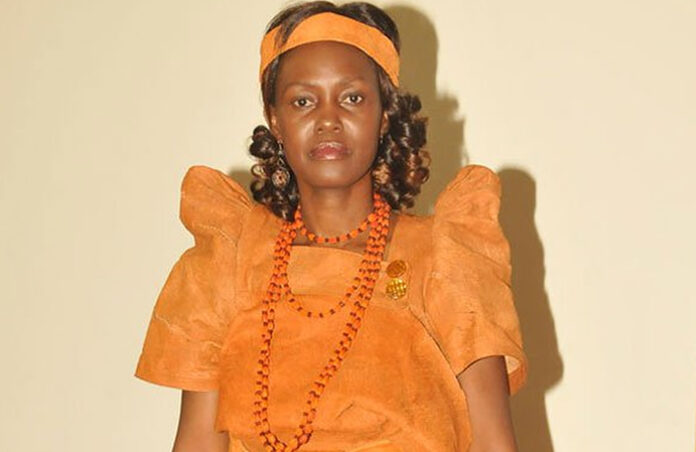
Apart from close relatives, Maureen Kyalya was hardly known in Jinja yet when she presented herself as a candidate for the Jinja district Woman Member of Parliament in 2011, she almost won.

Kyalya had spent a great part of her life living and studying in the United Kingdom. So, few people got to know her in Busoga region where she was born, 41 years ago.

In the 2011 general elections, Kyalya took Jinja by surprise, gaining instant popularity, which made her one of the top contenders for the Woman MP seat.

Kyalya who was the Forum for Democratic Change (FDC) flag bearer, lost to the incumbent NRM’s Agnes Nabirye.

Kyalya only joined the race after her (Kyalya’s) mother Irene Wekiya lost the NRM primaries to Nabirye and decided to bow out of the race.

Despite being new on the political scene, Kyalya put up a spirited fight, wowing the electorate with her charismatic style of campaign.

She contested the election results in court but before the final verdict could be given, Kyalya shocked her supporters when she announced she had lost interest in the case.

Shortly after, in July 2012, she was named coordinator of the National Poverty Alleviation Programme in Busoga sub region, working under State House.

“The reason I joined politics was to fight poverty among the Basoga. The President has identified me as one of those who can play a leading role in the fight against poverty. I’m not an opportunist like some people think, I’m just identifying myself with a political system that has the best option to work with the grass root people and fight poverty,” was her response to critics who said she had been compromised.

But soon, Kyalya went on a collision course with sections of people in Busoga, including local council leaders and technical officers, who did not agree with her controversial style of work.

Some criticized her of high handedness and arrogance but she maintained she was focused on achieving her goal-alleviating poverty in Busoga- and that nothing could stand in her way.

Kyalya then clashed with cultural leaders after she got involved in the Busoga Kingdom leadership wrangles. To her, with the exception of Bulamogi chief Edward Columbus Wambuzi, the rest of the hereditary chiefs in Busoga were occupying the seats illegally.

She went on to parade what she called the genuine chiefs in each of the chiefdoms and vowed to ensure they assume power, which further caused disharmony in the kingdom.

Last year after about two years in the office, President Yoweri Museveni recalled her and promised to post her elsewhere, but she left for the UK where she has been living until recently.

Kyalya, who describes herself as an activist for social change, is a lawyer who studied at the University of Portsmouth in the UK. For her secondary education she went to Iganga Secondary School.

She is the daughter of Kanobe Kyalya (RIP) a former Democratic Party stalwart and mayor of Jinja municipality in the 1980s. Her mother Irene Wekiya once represented Jinja in Parliament and currently is Uganda’s ambassador to the United Arab Emirates.

President Yoweri Kaguta Nominated

0

MUSEVENI NOMINATED BY EC
_______________________________

 3.25PM:  MUSEVENI BONGAS WITH MUSICIANS

Ugandan musicians recently launched a new campaign song for President Museveni titled ‘Tubonga Nawe’ to drum up support for the NRM leader in the 2016 presidential elections. And now that Museveni has been duly nominated, he took off time while at Kololo to ‘kubonga’ with this group of artistes.

 2.50PM:   CAUGHT UP?

See what the day that had started off bright and sunny (weather-wise) had turned into? If you forgot to carry along an umbrella and you were caught by the downpour somewhere in town, you definitely must be soaked up. Well, at least you now know better than to be blindly carried away by cute morning weather. It can turn topsy-turvy, you know!

1.50PM:    MUSEVENI GROOVES WITH HIS SUPPORTERS

1.10PM:  “I WILL STAND WITH YOU’

Before starting to address his supporters, President Museveni hands to the microphone to his wife, the First Lady who thanks Ugandans for loving her husband.

On his part, Museveni calls on his people to endure the downpour because it means blessings.

“I promise I will stand here with you for the whole day and we are going to enjoy together come what may,” he said.

Museveni is giving his key issues in the 2016 manifesto.

1.05PM:  PRAYERS, MUSICAL PRESENCE
OK I know it’s a soggy afternoon and you must be all cuddled up, but let’s get your brains fired up. A little quiz for you here:  See any familiar faces? I bet you do, so let’s start . . . Judith Babirye (on the mic) . . . anha?

1.00PM:  RAIN OR SHINE . . .

President Museveni’s supporters brave the early afternoon downpour

Loyal!

12.55PM: SEA OF  YELLOW


12.50PM: THE BIKERS


12.34PM: FOOD AFFAIR

Meanwhile, it’s a food affair as well in the backdrop as the NRM cooks for supporters  at former Shimon Demonstration School premises

12.20PM: MUSEVENI AT KOLOLO

11.40AM: HEADED FOR KOLOLO

AT KOLOLO, GETTING SET

11.15AM:  THE MAN AT THE HELM

Here is something or two about President Museveni . . .

On Wednesday, January 26, 1986, President Museveni, then aged 42, took oath as the 9th president of Uganda. Standing on the front portico of the Parliamentary Building, Museveni said he had brought a fundamental change. To some National Resistance Movement (NRM) supporters, this promise of a fundamental change coupled with the revolutionary mission of peace and stability is what endears them to Museveni, the NRM party presidential flag-bearer for 2016.

Developing the road sector, market expansion through regional integration, fighting ideological disorientation, eliminating sectarianism, improving education to refine human resource and democratic governance are some of his focus points.

 10.40AM: ON OUR WAY

Here we see scores of boda boda riders supporting President Museveni making their way to spear Motors to receive him after his nomination at Namboole. Next up, they will be headed for Kololo airstrip where Museveni will address his supporters.

10.30AM: EC NOMINATES MUSEVENI

The Electoral Commission (EC) examined President Museveni’s papers. He was was also accompanied by Prime Minister Dr. Ruhakana Rugunda, Evelyn Anite, Richard Todwong and other members of the Central Executive Committee (CEC). After being nominated, therefore becoming a candidate for next year’s presidential elections, Museveni was given a peace flag by Always Be Tolerant Organisation (ABETO). They always give each nominated candidate a peace flag.

Voters Speak Out: We Want Job Opportunities

0

Unemployment was the eighth most important issue the voters raised. They want their elected leaders to address it in next year’s general elections Tracy Gwambe writes

Clad in an over-sized Kitengi dress, and wearing worn out cornrows on her head, Justine Nalubega, 44, a single mother of four, narrates her frustrations of being unemployed. “It is 10 years since I lost my job. I have had a few short contracts here and there, but I cannot call that satisfactory employment.”

The struggling single mother was not being paid after working as a teacher for six months at a school in Kazo. “We had a free meal of posho and beans daily and we were promised salaries at the end of the month but I waited in vain,” she adds. “I quit.”

To survive, Nalubega opened a small restaurant in Kawempe, a Kampala suburb, but it was suffocated by the pressure of rent, school fees and daily needs. “When the business collapsed, I moved back to the family home for support,” she says.

Nalubega’s story mirrors the findings of an opinion poll conducted by Vision Group in June among Ugandans of voting age.

About 7,000 people were sampled out of the 15.4 million Ugandans eligible to vote. Unemployment was the eighth most important issue that the voters raised and which they want their elected leaders to address after next year’s general elections.

Specifically, the voters complained about the lack of jobs. Seventy-four percent of the respondents, or 11.4 million voters, cited the issue. They were also concerned about corruption, bribery and nepotism in the process of trying to find a job. In the few cases where jobs exist, the voters were concerned about the low or non-payment of salaries or wages.

The voters also want poor working conditions and delayed payment sorted.

UNEMPLOYMENT CONCERNS AND OVERVIEW

The Uganda Bureau of Statistics said in a report in 2013 that unemployment was highest among the youth. The population of Uganda is estimated to be just under 35 million, 80% of whom are the youth, or people aged between 18 and 30 years as defined by the Constitution.

Current estimates put the population of the youth of working age at 6.5 million, representing 21.3% of the total population. With an annual growth rate of 3.2% (1.3 million people), the youth population is expected to grow to 7.7 million this financial year.

The civil service was first reduced by half from 300,000 to 150,000 during the 1991 civil service reforms. By 2008, the numbers had climbed again to over 255,000 as a result of decentralisation.

ActionAid says 62% of Uganda’s youth are jobless. It says the situation is worse in the urban than rural areas. In a survey of 1,100 youth from 11 districts selected from the four regions of Uganda in 2013, ActionAid said: “Unemployed youth were likely to become a source of instability if the Government did not plan for them”.

“The majority of the youth out of school have no regular work or income. Some 61.6% of them were not in employment,” the report noted.

As if to confirm the predictions of ActionAid, a group of youth under their umbrella organisation called the Unemployed Youth brigade, has had run-ins with the Police. In one incident they smuggled piglets to Parliament in protest against what they said was the Government’s failure to create jobs for them. They painted the piglets yellow, the colour of the ruling NRM party.

The Uganda Bureau of Statistics report said rural youth were faring better than their urban counterparts because they have the option of subsistence farming. The report said Kampala, the central and the eastern regions had the highest unemployment rates of 15%, 6% and 8% respectively.

It said unemployment was higher for females than males. Experts say most youth subsist on the margins of the economy or have jobs that do not provide them with adequate means for survival. This situation is aggravated by the huge imbalance between the supply and the demand for labour, making the youth and job-seekers vulnerable to nepotism, low or non-payment and appalling conditions of work.

“A beggar has no choice,” says Lawrence Okimait, a graduate of computer science who has not been steadily employed since he completed university six years ago. O

kimait survives on odd jobs. “When you are desperate and your choices limited, you fall for far too less than your worth,” he said.

Okimait is hopeful the 2016 elections will bring the issue of unemployment to the top of the agenda of politicians as they look for votes. He said at 32, he should be settled with a family and a steady job. “But all I see is a void ahead of me with no hope in the horizon.”

NRM PROMISES

During the last election, the NRM came out strongly on the issue of unemployment. Its manifesto was titled, Better Service Delivery and Job Creation, which laid down strategies to bring hope to young people like Okimait.

The Government promised to attract more investors and enhance job creation. It said it would address the constraints faced by Medium, Small and Micro enterprises through training, access to financial services and to improve the business environment generally.

To end joblessness among the youth, the hardest-hit by unemployment, the Government pledged to empower them to be job creators and not job seekers. To this effect, it promised to establish the Youth Enterprise Capital Fund for start-up capital for the youth.

In relation to the funding, the Government promised a youth business skills training programme to impart entrepreneurship skills.

EFFORTS TO FIGHT UNEMPLOYMENT

Despite these promises and the achievements scored by the Government in addressing unemployment since 2011, the voters are still complaining and want more and better solutions.

And rather than wait for miracles to happen, some have taken matters into their own hands and left the country for odd jobs. The commonest destination is the United Arab Emirates, Iraq and Kuwait where Ugandans work as security guards thanks to the Government’s policy of exporting labour.

In fact, exporting workers has become a profitable business. Milton Turyasima, the assistant commissioner at the ministry of Gender, Labour and Social Development, said as of October 1, at least 43 agencies had been licensed to export labour.

Dr. Sam Lyomoki, the Workers MP and Secretary General Central Organisation of Free Trade Unions of Uganda, admits that unemployment is a big problem but it will not be resolved through finger-pointing, or blaming the Government.

“All of us must fight the problem. The opposition is pointing fingers yet they have not made any form of progress in fighting unemployment. They should work towards the good of the country,” he said.

Prof. Augustus Nuwagaba, an expert in poverty alleviation, agrees with Lyomoki. He said employment opportunities in government service are too few to meet the huge demand. He says the private sector needs to fill the shortfall.

Unfortunately, according to Nuwagaba, the private sector has been growing slowly which has “inhibited its ability to absorb the huge number of graduates that leave university annually”.

He also blames the education system which he said is not skills-based. “Uganda’s problem is not lack of educated people; we have so many highly schooled people, but they are not skilled.”

He said there was a huge disconnect between what the private sector wants and graduates universities produce.

Matovu Musoke, the executive secretary of Skilling Uganda Reform Task force, says to bridge the skills gap, Ugandans must embrace vocational training. He said other countries across the globe had beaten high unemployment through practical training, rising to become economic powerhouses. He cited Germany, Japan and South Korea.

“Ugandans must embrace this if we are to become a mid-income country by 2040,” Matovu says.

Another issue about unemployment is the mindset of the youth who want only white collar jobs. Matia Odoi, a mechanic at a garage in Luzira, a Kampala suburb, is frustrated by this mindset. He tried to interest two nephews to join his business, in vain. Most youth today, he argues, want to work in air conditioned offices, yet opportunities abound in vocational areas.

“They do not want to touch dirty oil. I cannot understand their thinking. Can’t they see I am doing well?” Odoi believes this attitude among the youth can be changed and urged leaders to launch a massive campaign “for the benefit of our young people”.

Workers MP Sam Lyomoki echoes Odoi’s sentiments. “We want to introduce apprenticeship programmes in Uganda so that graduates spend the first two years after university attached to organisations to get skills.

Observers, however, fear the sheer numbers of unemployed people will overwhelm the available places given the size of the economy.

Indeed, the Uganda Bureau of Statistics says universities and tertiary institutions churn out over 410,000 graduates annually, yet the labour market absorbs just 120,000. To address this, there must be a radical shift in the way young people are trained right from the home to the classroom, says Luciano Mawanda, the head teacher of Nakasero Senior School in Kampala.

He says children are raised to expect a job on a silver platter after school and not to use the knowledge acquired to create and take advantage of opportunities. “Change this, and you are on the right track,” he said.

DELAYED PAYMENTS

Delayed payment also featured prominently in the poll.

Shakirah Nansikombi has bitter memories about this. She worked at a job for a year before throwing in the towel. “I was elated to get a job as an administrator,” she said.

“However, in my fourth month, my pay started coming in late. I would go for months without pay. I had no appointment letter. I had not signed a contract so I did not know where to run for help.” After pressing her bosses for her four months’ salary, Nansikombi was instead sent on forced leave and told she would be called to pick her money.

She is still waiting for the phone call five months since. Herman Katende, an HR practitioner, says Nansikombi’s case is dead because she cannot prove she was employed by the company.

He says, perhaps in her desperation, she took on a job without signing a contract and was being paid in cash. “We advise people who get placements to sign contracts and insist they are paid through the bank so there is proof of employment,” he said.

Katende says the documentation can be used to sue for wrongful dismissal or nonpayment.

NEPOTISM AND CORRUPTION IN JOB SEARCH

Given the scarcity of jobs, desperate job seekers become vulnerable to exploitation and other abuses. No wonder the Vision poll cited nepotism, corruption and bribery among the evils that come along with scarcity of employment. Take the case of Rose Male, a mother of four, who has sat many interviews for jobs but was segregated.

“Many offices have jobs that can be taken up by the youth but then if you have no connections, then you miss out even if you have the qualification,” she said.

It appears nepotism is so entrenched in Uganda that one of the first laws that the NRM passed when it took over power in 1986 was the Anti- Sectarianism Act. The Act made it a criminal offence to discriminate people and deny them opportunities, including employment, on the basis of religion, tribe or political affiliation.

Despite the Act, the vice persists and appears to be gaining acceptance across the population, Lyomoki says. “I was once attacked by the people from my home village blaming me for not employing my tribemates,” he says.

“I do not have to look at the tribe when I am recruiting. Mindset and productivity are key.”

MINIMUM WAGE

Some experts argue that a minimum wage would mitigate low pay and protect workers. Pius Bigirimana, the permanent secretary Ministry of Labour, Gender and Social Development, on June 2, announced to an International Labour Organisation conference in Geneva, Switzerland that the country was preparing to set up a minimum wage for workers.

Dr. Sam Sejjaaka, the chairman of UDB and a former professor at Makerere University Business School, says a minimum wage is undesirable and counter-productive in the current state of the economy. “It is not practical. You cannot talk about a minimum wage in a situation where there is no full employment. It is putting the cart before the horse,” he said.

“First create jobs, skill the workers and raise awareness and they will agitate for increments. It is one thing to set in law and another to enforce. In fact having such a law which is counter to the state of the economy will create greater insecurity for the lower worker because businessmen will make them casual labourers rather than put them on staff and put them on a minimum wage.”

In 1984 the Government set the minimum wage at sh6,000. And in 1995 the minimum wage advisory council recommended sh75,000 a month.

INTERVENTIONS

Aware of the challenges of unemployment and associated evils, the Government has come up with some solutions.

In 2013, it earmarked sh265b to empower unemployed youth countrywide under the Youth Livelihoods Programme. President Yoweri Museveni launched the programme in 2014 and is being implemented jointly with the local governments.

The funds are advanced to the Youth Interest Groups (YIG) in form of a revolving fund in order to increase outreach and enhance sustainability of the Programme. Bigirimana said 71,866 youths have so far benefited.

Of these 45%, or 32,113 of the youth were female and 55%, or 39,753, were male. They received sh38b for 5,507 projects. “Many people thought the youth were not interested in agriculture but the projects show that the majority of projects are in agriculture. We also have university graduates getting the funds. Those who have received the funds have also started paying back,” Bigirimana said.

Another intervention has been the upgrade and expansion of training institutions to equip students with skills to beat off poverty. This is being undertaken through the Skilling Uganda taskforce which was launched in 2012.

Arnold Twebaza, the management adviser, said: “We want to equip students with skills that can get them out of poverty, but that is only if they receive quality training from highly trained instructors.”

He also said students must also interact with the right and up-to-date technology and be trained by the best tutors to be relevant in the market. Although the voters want more, these efforts appear to be paying off. Uganda is among the 10 most improved economies globally and the top 5 in Africa in the latest World Bank ease of doing businesses rankings.

Uganda is ranked 122nd out of 189 economies. Uganda is ranked ahead of Tanzania and Burundi but behind Kenya and Rwanda.

This means that it is easier to invest and do business in Uganda than it was in 2011. Matovu says more successes will be registered when Skilling Uganda strategic plan which runs up to 2021 is implemented. Top in the strategy, he said, is the plan for the Government to work with private investors and private training providers so that the two sides agree what skills are needed in the economy.

“International experience shows that effective and relevant skills development systems are built on strong alliances with employers and the business sector,” he adds.

Notable examples include the construction and oil sector.

“It is for this reason that immediate priority has been put on developing and putting in place skills development programmes for the oil industry, construction, manufacturing, agriculture and tourism.

“Over 13,000 jobs are expected to be created directly and indirectly during the initial phase of oil extraction in the country. The construction of the standard gauge railway is also expected to create lots of job opportunities,” Matovu says.

THE WAY FORWARD

Prof. Nuwagaba says these interventions are good but corruption should be tackled and made a risky venture to indulge in. He says Uganda needs to change the education system from theoretical to skills development.

He said the Universal Secondary Education was misplaced because it doesn’t add value “It would have been Universal Technical Education so that it builds skills needed by the private sector. This would increase the employability rates in the country,” he explains.

He further notes the need for equal pay for work of equal value so as not to demotivate employees.

He hoped that the Salaries and Remuneration Commission which is to be introduced in the next financial year will help address the huge salary disparities that exist in Uganda’s employment environment. For the unemployed Okimait, the time for talking is over. “Act now; we have waited too long for the promises,” he told leaders.

WHAT OTHER POLITICAL PARTIES PROMISED

FDC

The Forum for Democratic Change manifesto had job creation high on the agenda. It promised to provide investment incentives in priority sectors that employ the Ugandan youth and those willing to offer apprenticeship to facilitate experience. They also promised to protect workers from unfair dismissal from work and bad working conditions by implementing labour laws. FDC also promised to introduce a living wage for all the workers so that they can meet their day-to-day needs.

UPC

The Uganda people’s Congress promised to invest in high jobyielding projects, particularly in the rehabilitation and reconstruction of roads, schools, railway, hospitals and public health programmes. They promised to create two million jobs within four years, by investing in high job-yielding projects, to rehabilitate existing technical colleges and vocational institutes, and build new ones to provide practical industry-oriented skills directly related to reconstruction projects and labour market needs.

COMMUNITY & EXPERT VIEWS

Allan Sempebwa, media officer URA: Many university students should receive guidance before they choose a course. There is a mismatch between the students’ abilities and the courses that they study. Many students go for courses which they think will lead to lucrative careers at the expense of pursuing courses they are passionate about and good at.

Vincent Mugaba, the head of public relations, Uganda Tourism Board: Unemployment is one of the biggest risks this country faces. We spend so much money sending our children to school but the labour policies are not fair to them. The Government should amend the labour policies to ensure that foreign companies do not simply ferry in expatriate workers at the expense of Ugandans. The Uganda National Roads Authority should employ uneducated youth to work on up-country feeder roads instead of using machines.

Jackie Kihuguru, UTL head of customer operations: Youth unemployment is a big issue because companies tend to look for experience when hiring workers. Companies prefer to employ people from other organisations because they do not have training budgets. We employ interns and graduate trainees at UTL, but only a handful of companies are doing the same in Uganda.

Cerinah Tugume, Vivo Energy corporate communications manager: Young people need to be taught how to create income from any lawful work they come across and not to look down on any job. Most young people wait for a good job to find them and are not willing to do whatever work they can get their hands on. They need to be taught not to focus on money but on building skills and experience.

Godfrey Ssali, a policy officer, Uganda Manufacturers Association: The Government holds the greatest power to change the situation. It could start by levying high taxes on sports betting to discourage it and to also provide funds to repair the damage that sports betting has done to the youth. The Government should carry out a human resource survey to determine manpower gaps in line with the Vision 2040 master plan and to make appropriate plans to fill those gaps. Also, all universities should open vocational arms to train the youth in practical skills like engineering and plumbing.

Go Hang, Bukenya Tells Critics

0

Former vice-president Prof. Gilbert Bukenya has said people have been saying that he betrayed them but that he will follow the right path – and support President Yoweri Museveni.

“Those who feel bad about my decision should go and kill themselves,” he said Friday.

This was at his hotel, Kingdom of Katomi Resort Hotel, in Entebbe where he hosted Museveni and a large group of his supporters.

“For Norbert Mao [DP president] who said I was bewitched, it is up to him, but for me, I am with Museveni. Am I mad to support Museveni? If no, then why are people bothered?” he said.

At the same function, President Museveni welcomed all the people “Bukenya had taken away from NRM”, emphasizing that leadership was a sacrifice.

“I don’t know why people are on my case to leave power as if they are the ones who brought me,” said Museveni.

“People such as Betty Nambooze [Mukono municipality MP] say I want to steal the Buganda land, not knowing that I am the one fighting for their land.”

The President said it was good Bukenya saw the light and realized that he was dealing with Kizza Besigye’s people.

He said former prime minister Amama Mbabazi did not do anything developmental in NRM.

EC Explains Extension of Presidential Nominations

0

The Electoral Commission has denied extending its road map to accommodate the ruling NRM party.

This comes in the wake of new amendments to the presidential and parliamentary electoral acts that were passed in parliament this week allowing changes to be made to the electoral process including the removal of facilitation of all presidential candidates in addition to the reduction of polling time from 5:00pm to 4:00pm.

The Electoral Commission in response to these amendments was also forced to readjust its road map which will now see presidential aspirants nominated between November 3rd and 4th before hitting the campaign trail from the November 9th to February 10th next year with the elections taking place on the February 12th.

In addition to these changes, the nominations of Members of Parliament have also been moved to the 2nd and 3rd of December with campaigns kicking off after that.

The NRM party on the other hand has still failed to announce a new date for its party primaries after it was forced to cancel the earlier date of September 25.

This delay has been attributed to the ongoing structural and district elections that have seen a lot of controversy with many being reorganized at the party’s electoral commission headquarters in addition to the petitions arising from these elections that are still bogging down the party’s legal committee.

However Jotham Taremwa, the Electoral Commission’s spokesperson has clarified that any changes that have been to the nation electoral commission’s road map have nothing to do with the internal dynamics of the NRM party because their mandate is to implement the changes that have been made to the two acts so as to deliver a free and fair elections to the country.

“This road map is not cast in stone. When these amendments come in, we interpret them in terms of how they are going to impact on our work and what is it that need to be changed. So our response to these amendments has no relationship at all with the internal organization of any party leave alone the NRM”.

NRM party electoral commission Chairperson Dr. Tanga Odoi confirmed that all electoral petitions are in the process of being cleared and they are only waiting for a final report from the legal committee of the commission so as to announce all the results at once.

“We were supposed to receive the final report from the committee but they are still working on a number of issues. So I asked them to sort themselves out before they give us their final report”.

Taremwa also urged all aspirants who have decided to take part in these elections to respect all the rules and regulations that have been put in place by the commission to guide the entire process.

“If you have to participate in elections, follow elections laws, if you don’t want to follow the laws, then go do something else. But don’t criticize the [electoral commission] for doing the right thing and then clap for somebody who is doing the wrong thing”.

Conservative Party (CP)

0

The Conservative Party is a political party in Uganda.

It is led by Ken Lukyamuzi. From 2006, it has been sending one MP to Parliament.

Democratic Party DP

0
The Democratic Party was founded by seven revolutionary Catholics to fight for Uganda’s Independence and national unity. They were the products of the famous Catholic...

National Resistance Movement (NRM)

0
The National Resistance Movement (NRM), commonly referred to as the Movement, is the ruling political organisation in Uganda. It has over 263 legislators in the...

Candidate Promises to Scrap Parking Fees

0
The Rukungiri Municipality NRM flag-bearer for Rukungiri mayor, Geoffrey Tindarwesire Kenzigye, has vowed to scrap parking fees once elected mayor to encourage residents own...
Uganda Presidential Election Results

2026 Uganda Elections Results

0
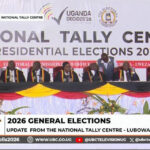
The Electoral Commission on Saturday (January 17) has released the 2026 Uganda presidential election results. Shortly after 4pm, EC chairperson Justice Simon Byabakama delivered the...
President Yoweri Kaguta Museveni

President Yoweri Museveni Wins Seventh Term: Electoral Commission

0
Uganda’s President Yoweri Museveni has been re-elected to a seventh term, the Electoral Commission has announced. Museveni, 81, won with 71.65 percent of the vote,...
Kyagulanyi Ssentamu Campaigns in Kisoro

NUP’s Kyagulanyi Decries Slow Pace of Development in Kisoro and Rubanda

0
The NUP Presidential Candidate Robert Kyagulanyi has campaigned in Kisoro and Rubanda Districts of Western Uganda. He started the day with a radio talk...

Registered Political Parties

0
As of September 2025, the Uganda Electoral Commission lists 26 registered political parties on its website. Some of the listed parties include the following:

Forum for Democratic Change (FDC)

0
The Forum for Democratic Change (FDC), founded on December 16, 2004, is one of the top opposition parties in Uganda. FDC was founded as an...

President Museveni Campaigns in Adjuman

0
EC does not rig for me Museveni also commented on concerns by the Opposition that the Independent Electoral Commission is biased. Museveni said that although he...

Nominations: EC Outlines Guidelines for Candidates

0
The Electoral Commission on Tuesday issued fresh guidelines for the process of the nomination of candidates for the Parliamentary elections that starts today. Candidates heading for nominations...