Home Blog Page 12

Museveni Speaks Out on Chaos in NRM Primaries

0

As I wrote in the other day’s paper, the careerist attitudes that have flooded into the Party, caused problems for leaders (mainly financial) and disoriented voters (expecting meaningless bribes from the leaders). 

To remind the reader, careerism means going into leadership as a job (murimu, omurimo, aswam-atesot, tic-luo, azi-lugbara) rather than going into leadership as a mission.  We the freedom fighters joined, initially, the struggle and subsequently politics, not as a career, but, as a Mission with specific aims.

Aim one ─ to oppose politics based on sectarianism of religion and tribe.

Aim two, to oppose the marginalization of the women, the youth (waiting for the age of 21 to vote instead of voting at the age of 18, for instance) and the disabled.  We characterize these two aims as patriotism (uzalendo, mwoyo gwa Uganda).

Aim three, Pan-Africanism (the economic and political integration of Africa), leading to the Political Federation of East Africa and the Common Market of Africa.  This is to create a bigger market for our farmers, manufacturers, etc. and guarantee our strategic security vis a vis the potential imperialists and hegomonists in the World.

Aim four, socio-economic transformation.

Aim five, disciplined democracy.

Aim six, building a disciplined, patriotic Army with a Pan-Africanist orientation.  Without these, I cannot be in politics.  In fact I have been in the struggle for a long time because I believe that all these six, including the Political Federation of East Africa, will be realized.  Otherwise, there would be no reason to waste my time and energy with politics.  I have my job, career, as a farmer and it is very rewarding and also satisfying.

Flooding into the Movement of careerist attitudes and the poor work by the Secretariat over the years, created dishonesty ─ using any means to get into that “job” of political leadership as a “career”.

Dishonesty meant bribing and cheating.  On account of bribing and cheating, many that were aggrieved opposed the use of the Electoral College to select flag bearers.  Why?  This was because the delegates would be “bribed” into supporting the flag-bearers that the electors of the delegates would not have supported.  The fewer, the easier to bribe.

The demand, therefore, became “no delegation of power but direct democracy” like in the ancient Greek cities.  This village-based direct democracy, ancient Greece style, actually worked well when we had just come from the bush because supporters could line behind candidates.   There would be no argument.  It would be self-evident and uncontestable.

Along the way, however, the idea of secret ballot came on board.  The candidate should not know who voted for him/her and who did not.  This, therefore, meant a massive General Elections being called a Party Primaries.

This means a lot of work and a lot of money ─ organize a secret ballots election in 60,000 villages for eight positions: Constituency MP, Woman MP, District Chairperson, Sub-County Councillor to the district, Sub-County Chairman, etc., etc.   In this last Party Primaries, the Party spent a total of sh30b.  The National Electoral Commission spends sh560b on 28,010 polling stations, not 60,000 like the NRM does.

This would still be manageable if there were two elements: honesty by the Contestants and Party Election officials and thorough preparations by the candidates themselves.  Honesty on the part of the contestants and the Party election officials must be clear enough to the reader.
I am sure there is no need for elaboration.  On the issue of the candidates preparing enough, the crucial element is having a reliable and alert polling agent at the village polling station.  When the opposition rigged the by-election in Bushenyi, I brought a solution to the NRM.
Let the candidates select candidate agents they personally trust ─ two of them per polling station.  One should observe how the voting is going on.  The other should record the names of everybody that comes to vote that day: “Museveni, Mukasa, Mugisha, etc”.

At the end of the polling, at 1700 hours, you will have recorded that, for instance, 300 village voters voted on that day, name by name.  These are villagers that are known to everybody.  Even the village members that are staying away from the village that may come back from the towns to vote in the villages are known.  Museveni of Rwakitura, who stays in Kampala, is known.

Soon after polling, the ballot boxes are opened in the presence of everybody, votes are counted, results are announced, recorded and every candidate agent signs.  The elections are finished.  The rest is adding up ─ famously called “tallying”.

If these candidate agents are honest ─ the two of them ─ nothing will go wrong whatever the other weaknesses ─ dishonesty, inefficiency, etc., of the candidates and election Party officials.    If the candidate agents are chased by Police or hired hooligans, then the results of that polling station should be canceled and repeated.

The Secretary-General, working with the Electoral Commission of the NRM should ensure this.  It seems, however, many candidates did not also have reliable agents at the village polling stations.  Some could be bribed by opponents, etc.

It is this mixture of inadequate funding for such a massive exercise; dishonesty caused by the careerism (jobism rather than mission); and the inadequate preparation by the candidates to ensure, through reliable polling agents who record the voters by name and observe the counting and declaration of results, that their votes are guarded; that is responsible for the present post primaries arguments among our contestants.

Given all his, my advice to the NRM Electoral Commission has been as follows: listen to the illustrated complaints carefully and, where the situation is clear, cancel the results.  Where it is not clear because of some missing steps, then, counsel the stakeholders by pointing out, in detail, where the gaps are.

The Administrative Secretaries of the Party at the district would have helped in this if politicians had not pushed for their Political Assistants that have no objectivity and, therefore, no value.

I hope that when our political leaders and cadres read this short analysis, they will be able to see that there is need for collective effort by all of us to remove the original causes of this distraction from the long, mission ─ oriented journey of the NRM.

The original causes are careerism which breeds dishonesty and the inadequate preparations by all concerned.  When, for instance, we talk of reliable polling agents by candidates, immediately the talk of money comes in.  How will these agents be paid?  That is part of the problem.

If there are people who are concerned about their area (district, constituency, sub-county, etc.), why should they not volunteer for free for just two days in five years to support the candidate they want to be Member of Parliament for their area, or Chairman of a district or the Chairman of a Sub-county or Councillor to the district?

How about me who endangered my life for a total of 13 years for free to fight for the freedom of the country?  How about my colleagues who did the same?  Were we fools?  In the Book of Mathew Chap: 23:23; it says: “They left undone what they ought to have done and did that they ought not to have done and there is no truth in them”

This is a wrong spirit and logic.  It must be expunged.  As a flag bearer of the NRM, I expect, at least, 4 Volunteers to guard my votes against the cheating by whoever might think of doing so.  The most important are these two at the polling station.

One will be to record the names of people who come to vote and the other one to observe the voting process.   Should these volunteers be paid or should they give voluntary service as a contribution to our cause?  They could even bring their packed lunch.

This may mean the need for four observers so that when the two pull aside to eat their lunch, the other two remain on duty.  Is it really too much to have some of our supporters give voluntary service to our cause two times (a day each time) in five years?  NRM members reflect on this.

Besides, the NRM members should massively fundraise for the Party so that the Party has adequate money for its activities.  It is not correct to make no financial contribution and you only complain when there are difficulties.  The NRM account number is 1100039293 (Shs. Account) and 1100069362 (Dollar Account) in the Housing Finance Bank.

As to the long-term solution to the malpractices that were witnessed in the NRM Primaries, there are three possible remedies. Remedy one is to keep the present system.  It can work with honesty and more alertness by the candidates and their agents although it is very expensive for the Party.

Remedy two is to go back to the electoral colleges.  This can only work if honesty is upheld by everybody and bribing is banished.  The third remedy is to go back to lining behind candidates.  This would remove the secrecy but it would be transparent.  The fourth remedy is to go computerized with finger-prints digitally read by a computerized digital reader like the one we are acquiring for the National Electoral Commission.

Therefore, NRM members and leaders should know that these problems are temporary and are solvable.  Be strict with honesty and alertness.  These problems will disappear.

Otherwise, in future, we will have to rely on the honesty of the computerised finger-print reader.

Yoweri K. Museveni Gen. (rtd)

CHAIRMAN NRM
Government Expenditure Must be Revised – Besigye

0

The Forum for Democratic Change (FDC) presidential flag bearer, Dr. Kizza Besigye has criticized the National Resistance Movement (NRM) over what he called wasteful expenditure of public resources.

Unnecessary expenditure at the expense of key sectors like education and health, Besigye said had resulted in a demoralized human resource and poor performance of the affected sectors leading to underdevelopment.

Speaking on Monday, during a rally at Irundu play ground in Buyende district on the first day of his campaign in Busoga sub region, Besigye cited purchase of six fighter jets at $760 million by the government as a wasteful venture.
Besigye who said as a member of the East African Community (EAC), Uganda is at peace with her neighbours and has no enemy to fight at the moment, also questioned the logic in government budget allocations.

“The budget allocated to State House and Office of the President is higher than what is allocated to agriculture the backbone of our economy,” he said, promising that if elected into power in the February 2016 polls, his government would increase the agriculture budget from the current 4% to at least 10%.
Besigye observed that if money is to reach the grassroots people and benefit them, government expenditure has to be revised

Besigye accompanied by FDC women leader Ingrid Turinawe, MP Paul Mwiru, arrived at Mbulamuti in Kamuli district at 8.51am aboard a ferry across River Nile from Kayunga district.
He was received by opposition leaders in the region including Prossy Naikoba, Dominic Wakabi, Moses Bigirwa and FDC vice president for eastern region Salaamu Musumba, who is also the Kamuli LC 5 chairperson.

At Irundu where he held his first rally, attended by several supporters, Besigye decried the alarming poverty eating up teachers. As a result, he noted that teachers no longer command the respect they used to, an issue case he promised to address through salary increment.
“Today a teacher’s shoe-sole tells a lot about their plight,” he said.
Besigye also addressed rallies at Bugaya trading centre, Makanga, Bukungu and Kamuli Taxi Park.

Sounding rather optimistic of victory, Besigye noted that, in the budget that will be read in June, 2016, primary school teachers will earn sh650,000, secondary school teachers sh 1 million while doctors will get sh 3.5 million each.
Besigye reiterated his promise of a free computer to every secondary school student if he becomes president of Uganda next year.

“Every secondary school student will get a personal computer. We are in the digital age, not an era where people still write on the floor!” He said holding the audience breathless seemingly eager to know how.

In explaining how he could do the magic, Besigye noted that secondary students in Uganda are 1.2 million, and (that) if each student gets a personal computer worth $300, the whole project will cost $360 million and the money which for example was used to buy the six fighter jets would build teachers’ houses. Besigye observed that the money is available but the problem is, it is used the wrong way.

He noted that his government will have less than twenty one ministers as opposed to the current 80 ministers. “We are most likely to have 400 MPs each getting 25 Million shillings! All that for what when a teacher is getting 360,000 shillings” he questioned.

Besigye pledged to revive the agriculture sector by putting in place a bank geared towards improving agriculture where farmers will get insured agricultural-loans so that when yields are poor, insurance clears what would have been cleared by the farmer.

He additionally promised to revive cooperative societies to market farmers’ produce. Besigye also promised a minimum price for agricultural produce and a national food reserve if agriculture is to remain a dependable sector.

Museveni in Pallisa, says no New Districts until 2017

0

At Agule trading centre, supporters converged at Kevinah Amoit’s drinking joint as they waited for President Yoweri Museveni’s rally at Agule-Morokume Primary School.

With a baby strapped to her back, I found Amoit pouring millet brew into a pot nestled in the middle of a ring of men. A mother of 11 children, she speaks emotionally about the daily challenges she faces while trying to fend for her children.

“If I do not work hard, no one will cater for my children. Here, men do not work. It is upon us to look for money. When the President comes here, I expect him to say something about loans, especially how he will extend them to the women in Pallisa district,” Amoit, a resident of Agaro village said.

Some of the men and women at Amoit’s joint, pointed at the rising poverty levels, emphasising the need for small loans to fight poverty and the need to work on the road network in the district, especially repairing the Aleles bridge that links Pallisa to Teso sub-region.

“Government programmes such as NAADs are not reaching the intended people in the village. This laxity has increased poverty levels,” said Mary Akol, a resident of Morokume village in Agule county.

It was Museveni’s second day of campaigning in Bukedi sub-region. While in Agule, the presidential flag-bearer of the National Resistance Movement (NRM) started by explaining why the Government has delayed in repairing major district hospitals, revealing that emphasis had to be put on health centre IIIs.

Reason for delay

Arguing that health doesn’t start with hospitals, the NRM candidate said although some people have questioned the Government’s delay renovating district hospitals, 930 health centre IIIs have been built in various sub-counties in the country.

“The delay to renovate all these hospitals was because we were dealing with the frontlines,” he said, citing immunisation and the provision of free mosquito nets as major steps that the Government undertook to curb diseases.

Dr. Col. Kizza Besigye, the Forum for Democratic Change presidential flag-bearer recently came out to criticise Museveni for not repairing Abim Hospital in Karamoja sub-region. “Immunisation is the biggest support for health and it is done at the health centre III at the sub-county. We have built 930 new health centre IIIs. The plan is to stop you from getting sick,” he said, calling on voters to emulate his lifestyle by trying to avoid sickness. However, he pledged to repair Pallisa Hospital.

Pallisa district gets sh29b from the central government every year, a sum Museveni says has done some work, especially in the education sector. Museveni said that in 1961, the entire Bukedi region had three secondary schools, but today, there are 11 secondary schools in Pallisa district alone. Pallisa has 212 primary schools. Museveni’s pledge is to make sure that every parish in the country has a government primary school, every sub-county a secondary school and very constituency a technical school.

RDCs and the youth fund

The NRM candidate added that to combat poverty in districts and the country, his government will emphasise what he described as wanainchi funds, such as that for women, youth, operation wealth creation, microfinance and for innovation.

Under Operation Wealth Creation and the NAADS fund, Museveni pledged to put sh1 trillion, sh324b into the youth fund, sh324b into women fund and sh180b in the microfinance project, which mainly target village groups. Museveni said under microfinance, every village will get at least sh2m.

There are 60,000 villages in the country. The rest of the microfinance money will be for the educated people who want to start businesses. Museveni yesterday directed resident district commissioners (RDCs) to monitor the funds, especially that of the youth, so that they can weed out corruption.

“If somebody comes and says: ‘this is not yet done,’ please tell them that we know that some things are done today and others tomorrow. The future of Uganda is really good,” he said, emphasising what he describes as the NRM concept of prioritisation.

Asked whether injecting more money into the youth and women funds and directing RDCs to monitor the distribution of this money would help small businesses of women in Pallisa district such as Amoit, the district LC5 chairperson, Bantalib Issa Taligola, said: “The concepts are really good, but there are gaps which must be plugged urgently.

“The issue of value addition is really important and we must empower the people to achieve this. We need to revive co-operatives, so that farmers can have a better negotiating ground for prices of their products,” he said.

Former Inspector General of Police John Cossy Odomel said although the foundation for development has been made by the NRM government, the failure to explain programmes to the people in Pallisa is the missing link. “What people in Pallisa want is a sense of direction and re-organisation so that our people can be helped out of poverty,” he said.

Sh385b for roads On roads 

Museveni said the Government has already secured sh385b to construct the Pallisa-Tirinyi-Kumi road under the Government partnership with the Islamic Development Bank. “The contractors have been pre-qualified. By the end of March, 2016 the contract will be signed and work will commence in April 2016,” he said, pledging to work on the Aleles bridge urgently.

The NRM candidate also said Sh39b had been secured to propel the compensation claims of the over 4,842 affected people to pave the way for the road construction.

On causing mayhem ahead of the 2016 general polls, Museveni said: “Nobody can disturb our peace,” which appealing to the people of Agule to vote NRM and the old man with a hat.

Museveni, who was given a stick and stool by the area elders, also pledged to grant the creation of Gogonyo sub-county. Among the elders who handed Museveni a stool and stick was Alfred Aporu, 76, from Otengia village.

Aporu, who is battling trachoma, was lucky to capture the eye of the President. “I am very happy that the President has directed his medical team to treat my eye,” he said.

On districts

In Butebo county, it was voter-candidate interface over the pledge of a district. Museveni, who had earlier campaigned in Kibale county, which used to be part of Butebo, but was carved out to form a constituency, said when he used to campaign in Butebo with his late friend, Dr. Steven Mallinga, the problem of lack electricity was visible.

“I am now happy to find electricity. That is now development. You are now left with the problem of chasing poverty from your homes, which we are going to solve,” he said during a rally at Butebo sub-county headquarters.

Yet to some voters, the most pressing in Butebo is the district status. Museveni explained to the demanding voters that he could not grant them a district status because the Government cannot over spend on administration at the expense of roads and electricity.

The NRM candidate clarified that contrary to media reports that he has granted districts during campaigns, the decision to roll out additional districts in 2017 was made by Parliament after a thorough conversation with all stakeholders.

However, voters in Butebo wanted Museveni to make a pronouncement that Butebo district shall commence starting yesterday. “I appeal to you to be calm. As bush fighters, we plan. We stopped the districts because new districts required a lot of administrative expenses. Are you going to sleep in district headquarters?. Uganda will not disappear if you don’t get Butebo district today. You will get Butebo district in 2017,” he said. “Vote NRM because NRM has brought you from far,” he said.

Museveni also received several defectors from opposition parties during the rallies. Today, Museveni will campaign in Tororo district.

Besigye Winds Up Rakai Visit

0

FDC presidential flag bearer Dr. Kizza Besigye has promised to increase the salary for the lowest police officer to sh650,000.
“Those police officers you see are destitute. The struggle we are involved in includes liberation of police officers. We shall increase the salary for the lowest police officer to sh650, 000,” Besigye promised, causing a thunderous applause from his supporters. The lowest police officer currently earns sh350,000.

He made the pledge on Saturday during his rally at Mutukula near Uganda’s border with Tanzania.

Vowing that he would never betray them, Besigye promised the people of Rakai a federal system of governance with autonomous regional governments which can solve the social-economic problems of their communities.

Besigye started traversing the villages and towns in Rakai district as early as 8:00am and ended with a rally at Kyotera that ended at 7:00pm. Besigye addressed rallies at Kasensero landing site, Rakai town, Lumbugu, Kakuuto, Byakabanda, Bakijulula, Kibaale, and Kabonero among others. Some of his supporters gave him money.

At every rally, Besigye urged his supporters to form various groups of 10 people dubbed Power10 (P10) in every area to get on the countrywide network of volunteers who will prevent any form of rigging.

“It is very unfortunate that 30 years down the road we are still facing the problem of vote rigging which is the reason Museveni waged a war. You have seen NRM people rigging in their party primaries. You can guess what will happen when they compete with the opposition,” Besigye said.

Besigye said he had received disturbing reports of security officers pulling down his posters and intimidating his voters.

Besigye dismissed fears that the army would not allow the opposition to take over in case President Museveni loses. “Gen. Muntu you see there and I contributed to the building of our army. It is not Museveni’s army. It is a national army which should not be partisan,” Besigye argued.

Besigye promised to increase the budget for the education sector. He repeatedly promised a computer to each of the secondary school student and pay raise for the teachers. He said salary for primary teachers will be increased to sh650, 000, secondary teacher sh1m and sh3.5million for a medical doctor.

The lowest paid primary teacher currently earns sh310,000 and the lowest graduate secondary teacher earns sh480,000.

“Our problem is not lack of money but misuse of the money. Buying computers for secondary students requires only US$360m but the NRM government bought six fighter jets at US$760m. Rwanda pays her public servants better than us yet Uganda has more money than Rwanda,” he argued.

Highlighting the importance of moving at the same pace with the rest of the world in embracing the computer/ICT revolution, Besigye said, “Gone are the days of writing on ground as it was in Kaguta’s school days. This is a computer age and young people must be given the necessary facilities to be competitive in the global market.”

He promised that his government would re-instate presidential term limit..

“President Museveni has been in power for 30 years. When a leader overstays in power, he starts destroying even the good things he had done and increasingly becomes a dictator. What Museveni has failed to do in 30 years he cannot do in the next five years,” Besigye argued.

The FDC presidential flag bearer said his government would prioritize the agricultural sector in eradicating poverty.

“Whereas over 80% of Ugandans depend on agriculture, the NRM government in its wisdom spends more money on State House and Office of the president than what is allocated to NAADS,” he said.

He promised various initiatives for boosting agriculture including provision of tractors, an agricultural bank, irrigation schemes, investing in agricultural research, constructing storage facilities, reviving cooperatives, and establishing national food reserves.

His other promises included reconstructing state institutions to be non-partisan, infrastructure development, scraping unnecessary government expenditures, revamping the health sector, and constructing an economy whose growth is reflected in all the citizens.

A recent Vision Group survey showed that Health related issues top the issues that concern the voters in Central region. Other issues of major concern included Water and Sanitation related issues; Road network; National security; Poverty; and  Employment related issues.
VOX POPS FROM RAKAI VOTERS
Patrick Katumba (farmer in Bigandu):
We want markets for our produce. We also hope that Besigye will work on our roads because most of them are in a bad state. We don’t have clean water and no medicine in hospitals.

Jovanish Natukunda (Lumbugu village):
We shall vote someone who is ready to bring us clean water in our area. We also want better prices for our produce and medicines in the hospitals. UPE schools are charging us fees.

Doris Nambajjo:
There are so many educated people who have no jobs. I want the next president to address that crisis. Many of our children fail to get university education because parents are too poor to pay for them. The power tariffs are so high.

Richard Mutebi (secondary teacher at Heroes Vocational SS):
We want someone who will create employment opportunities in all sectors. Most secondary school teachers are not on government payroll.  They are in private schools which are exploiting them. The salaries for teachers should be increased.

Emmanuel Ntale
Most of the roads in Rakai are in a sorry state. Poverty levels are so high. We are tired of empty promises from political leaders. We want leaders who can seriously solve peoples’ problems. The dropout rate of students is high because of high poverty levels.

Remegio Ssenkima
The roads in our area are very bad. We also want a leader who will bring factories to our area to solve the high rate of unemployment. We need markets for our produce. We want teachers to be paid well so that they are motivated to teach our children. Our hospitals have no medicines and medical workers are not enough.

Dominiko Bwogi
The first problem I want addressed is to increase salaries for teachers so that they can have a decent living which befits their noble work. In most of the places in Rakai district we don’t we have clean water.

2016 elections will be the most peaceful- Engineer Kiggundu

0

Engineer Badru Kiggundu, the chairman of the Electoral Commission has assured Ugandans of a free, fair and credible 2016 general elections.
Kiggundu said they have procured the bio-metric voter verification system [BVVS] where data for the entire district will be placed in every polling station to detect those who would try to vote more than once.

“We shall have the data for the whole district entered into these machines and those who will attempt to vote twice shall be identified, arrested and prosecuted. We shall ensure that the winner is declared because I love all of you,” Kiggundu said.

He rubbished claims from some opposition leaders that he is biased and favours the incumbent and that he has been declaring wrong results in the previous elections, saying such people who spread such information lack the knowledge of the electoral laws.

Kiggundu made the remarks on Friday during the one-day National consultative forum for political parties and political organisations held at Rock Classic Hotel in Tororo. The theme of the meeting was “Nurturing political tolerance for peaceful elections”, and was attended by over 200 participants drawn from Bukedi sub-region.

He advised all the candidates to ensure that they deploy their agents at the polling stations to guard their votes and give them the declaration forms. He warned the candidates against self-declarations because the commission may be compelled to nullify elections of a particular polling station arising from any irregularities detected.

Kiggundu equally condemned forms of electoral violence being engineered by particular candidates, saying it is every individual’s role to make the electoral process very peaceful.
He challenged parents to discourage their children from being used to cause public disorder, violence and chaos, adding that those politicians who put them at the fore front of violence will not stand in for them once they fall into trouble.

What you need to know is that every competition will always have one person emerging as a winner. Therefore, losers should not offload their weaknesses to the Electoral Commission.

The participants accused the commission of being bent to one particular candidate and expressed doubts if it will dare to declare any other candidate a part from the sitting head of state.

Amanya Mushega, the chairperson of the national consultative forum, described the current Electoral Commission as a one man’s project aimed at mocking Ugandans as they waste time in elections and at the end; they declare their own candidates as a reward.
Mushega condemned the ongoing recruitment of crime preventers, saying that it’s a manifestation that the 2016 general elections will have a lot of intimidation where voters will be forced to vote for a particular candidate.

Mushega said if the so called crime preventers were meant to be neutral then they would be dressed in a neutral colour.

The participants demanded the immediate disbandment of crime preventers, saying they had become a nuisance during this electoral process and their recruitment timing was wrong.

Joseph Okadapao from Iteso cultural Union and Ojwang Obbo, the Tororo District UPC chairperson, described crime preventers as crime promoters recruited at the election time to take advantage of the ignorance of the population on the existing laws to cause impunity and rig elections in favour of the incumbent.

Rev. George Okiror Etiang, the secretary of Uganda Joint Christian Council condemned the uncivilised manner in which the Police is handling the citizens, saying it’s casting the country in bad light.

The Police commissioner, Haruna Isabirye who represented the Inspector General of Police appealed to citizens to look at the crime preventers from a positive angle, adding that their recruitment will continue even after election period.
He, however, down played the concern of crime preventers wearing yellow T-shirts, saying there were no donors who volunteered to give T-shirts to crime preventers.

Will Ruhindi survive Lukwago in Nakawa?

0

Key political payers in Kampala have started preparing for the mother of all battles pitting the ruling National Resistance Movement (NRM) and Kampala Lord Mayor Erias Lukwago. The battle kicked off on Tuesday, when the Government tabled a Bill to amend Kampala Capital City Authority (KCCA) Act.

The Bill suggests that the Minister for Kampala will become the political head, instead of the Lord Mayor. It also proposes that the Lord Mayor should be appointed from among the city councillors. The Bill has changed the dynamics of politics in Kampala, sending Lukwago’s camp to look for plan B.

During a press conference recently, Lukwago said the fought to stop NRM from denying the people of Kampala a chance to elect a Lord Mayor is a matter of life and death. Little wonder that Lukwago, who accompanied Forum for Democratic Change party flag-bearer, Dr. Kizza Besigye to Rukungiri district on his maiden rally this week has not joined him on other public rallies.

Saturday Vision has learnt that the plan B, which Lukwago has unveiled, is to shift to another constituency within Kampala. The two constituencies Lukwago is reportedly eyeing either Nakawa division or Makindye west. Lukwago’s supporters on social media have been urging him to run for the Nakawa parliamentary seat and unseat the incumbent, Fredrick Ruhindi (Attorney General), one of the people behind the Bill.

Nakawa is an NRM stronghold and Ruhindi is still a hard nut to crack. But the Nakawa NRM camp is divided between Ruhindi and the mayor, Benjamin Kalumba, so Lukwago could exploit this to win, his supporters believe.

In the 2011 mayoral elections, Lukwago defeated the NRM flag-bearer, Pr. Peter Sematimba, in Nakawa division with 34,762 votes against 21,737. Lukwago won the overall mayoral race with a margin of 110,310 votes against Sematimba. Pundits say Lukwago could give Ruhindi a bloody nose in Nakawa. Other sources in Lukwago camp say he might choose to go to Makindye West, currently represented by MP Hussein Kyanjo.

The frail Kyanjo has declared that he will not return to Parliament. Lukwago’s ally, Allan Ssewanyana, has been eyeing the seat. But reliable sources say Sewanyana may return to City Hall and leave Lukwago to contest for the seat. During the 2011 Mayoral race, Lukwago got 58,766 votes against Ssematimba’s 28,906 in Makindye division.

The law allows Lukwago to contest in any constituency in the country as long as he is a registered voter, whose name appears in the national voters’ register. When contacted for a comment on their known public contacts both Lukwago and Ssewanyana’s phones were picked by a woman, who said Saturday Vision had called a wrong number.

But the FDC aspirant for the Nakawa seat, Michael Kabaziguruka, said he had been approached by some party members, asking him to relinquish his seat for Lukwago.

“It is true, some party members approached me to step down for Lukwago on Wednesday,” Kabaziguruka said, although he remained non-committal on whether he had accepted to step down. Saturday Vision has learnt that Kabaziguruka, who has aspired twice for the same seat, was not willing to step down, even though his party is willing to compensate him for the bills he had incurred in printing posters and T-shirts for the race.

Should Lukwago run, he will benefit from his closeness to Besigye. He recently appointed him his special mobiliser for the 2016 presidential elections and the move to grant him Nakawa may be aimed at appeasing him. Salim Uhuru, the NRM chairperson for Kampala Central, says whereas his camp is ready to take on Lukwago in any constituency, including Nakawa, he does not support the Bill coming at this time.

“Tabling the Bill now makes us (NRM) appear as if we are desperate to diffuse Lukwago at the time when we have a candidate in the race. President Yoweri Museveni brought democracy; we should be seen to defend it at all costs, even when it is not in our favour. Since power belongs to the people, let us take on Lukwago in the polls and if he defeats us, we concede,” Uhuru said. Efforts to speak to Ruhindi yesterday about the development were futile as he was not picking his calls.

LUKWAGO’S WOES

Lukwago’s woes started when he was thrown out of office in 2014 over abuse of office. He went silent, leaving everyone guessing his next move in the 2016 general elections. Politicians in different political camps wanted to know the political office he was eyeing in 2016.

Lukwago preferred to concentrate on his battles in courts of law. But last week, he declared that he would contest for the office of the Lord Mayor. The public declaration Lukwago made at Besigye’s rally at Nakivubo Stadium, threw hundreds of his supporters into wild jubilation.

The Lord Mayor commands a lot of support in Kampala, especially among the lower cadres, who work in markets. Lukwago’s supporters left Nakivubo ready to hit the city divisions to canvass for votes. Opposition legislators, led by FDC’s former leader of Opposition, Nandala Mafabi, on Thursday called for the delay to amend the Bill until after the 2016 general elections.

If the Bill is endorsed, Lukwago’s chances of becoming the Lord Mayor will become slim because KCCA is dominated by NRM councillors. If NRM retains the number of councillors in the council after the 2016 general elections, the next Lord Mayor can only be from the party.

At the time the Bill was tabled, NRM had endorsed dancehall musician, Daniel Kyeyune Kazibwe alias Ragga Dee as the party’s flag-bearer. Kazibwe is a newcomer in the city politics and pundits had ruled him out of the race, arguing that he is not Lukwago’s match.

It is not clear where the proposed Bill leaves Kazibwe, who injected millions of cash in the party primaries. Lukwago had started collecting signatures required by the Electoral Commission (EC) for the nominations.

The EC had also set the nomination date for people contesting for the lord mayorship, but the EC has put the process to a halt until the Minister for Kampala pronounces himself on the matter. Lukwago’s popularity in Kampala dates back to the time when he was Kampala Central MP, between 2001 and 2011.

As the area MP, Lukwago defended market vendors from being evicted by businessmen who had tendered the markets from the defunct Kampala City Council. Due to those ties, time came when vendors in Kisekka Market would dare anyone who touched Lukwago.

Government to Construct, Repair Community Boreholes – Museveni

0

President Yoweri Museveni, who is also the NRM presidential flag-bearer has on his 5th day of the campaign revealed that government will construct two boreholes in each village and repair broken ones saying that this will go a long way in solving water shortage during the dry season and provide access to clean water.
“Government will build two boreholes in each village. It is the work of government to repair and maintain these boreholes,” he said.

The President was yesterday (Friday) addressing a mammoth crowd at Omoge Primary School in Bala sub county, Kole South Constituency.

Museveni who received an overwhelming welcome by the supporters in Bala, urged the people to vote and keep NRM in power saying that the party has been tested and delivered to the expectation of majority Ugandans.

He said that NRM has numerous achievements that include peace and security in the entire country, infrastructure, development, Health and education among others. He said the Masindi Port-Rwenkunyu-Apac to Gulu will among others be tarmacked.

At the rally, some of the Uganda People’s Congress (UPC) stalwarts pledged support to President Museveni owing to the peace and stability brought by NRM government.

“Since UPC doesn’t have a Presidential Candidate, people should vote for Museveni because of the good things his government has done such as rural electrification, good roads and money for the elderly” Acheng Joy Ruth, MP Kole district said.

Museveni Pledges Free Exercise Book, Geometry Set

0

By 10am, pupils of Alira primary school in Akura Sub County, Alebtong district had lined up along the school’s play grounds to welcome President Yoweri Museveni, the National Resistance Movement (NRM) presidential flag bearer.

Before the rally kicked off, Rebecca Amuge Otengo, state minister for Northern Uganda, invited the pupils to recite a poem.  It was about HIV\AIDS and its dangers to society-and not the Universal Primary Education (UPE), which parents in the area say, has courted grave ills since it was implemented in 1997.

Mary Akullo, 49, a resident of Alira told New Vision that she is finding it difficult to pay fees for her eight children.

“I am a widow. I have ten children and I can only pay fees for two. The others help me with chores at home. The school fees is too high and government should intervene,” Akullo, who told the New Vision before Museveni’s rally started.

Akullo’s main complaint is that UPE, which she thought is a free service, has been turned into a money-making venture in Alebtong district and neighboring districts.

Ban on UPE fees

As if by telepathy Museveni responded to Akullo when he took to the podium.

He said more emphasis should be given to children, especially by uprooting UPE impediments that make children of school-going age to abandon education.

“We planned that there should be no school fees for the children of the poor. However, I have heard that some people are still charging money in our UPE schools. Some are even expelling these children. This is not good because if children are expelled it is Uganda that will suffer,” he said.

Putting a freeze on payment of fees-for UPE schools-that have been charging pupils, Museveni told voters on another rally at Alanyi Primary School in Abako Sub-County that a school’s inspection centre will be established in Kampala to monitor all UPE schools and ensure that pupils are not forced to pay fees.

He said when they decentralized education to districts or Local Governments; he thought that people will do their work. But, he said, inspectors of schools are no longer doing any work.

“When we started UPE, we wanted to share jobs where you parents would provide uniform, exercise books, packed lunch so that government would pay teachers, build teachers’ houses and school facilities,” he said.

“When we say everybody should go to school, it is for the benefit of all of us. But some of these people without consulting me and decided to charge fees for UPE children,”he said, emphasizing that some Ugandan parents are not yet rich enough to pay for primary education.

“Children whose parents are not able to pay should not be expelled from school. If we are all educated, Uganda will be much better,” he added.

Free scholastic materials, sanitary pads

On his third day campaign trail in the Lango Sub-Region Museveni, who spoke in English-laced with some words from Luo dialect-said that to boost the UPE programme, free scholastic material will be provided to pupils.

“In order to support our children, we are going to buy them exercise books, text books, mathematical sets, pens and pencils. The parents will remain with the job of buying uniform and providing lunch,” he said.

The other issue under UPE that Museveni tackled was the question of how to retain a girl child in school.

He lamented that a number of girls drop out of school when they experience monthly periods.

“When our daughters are in monthly periods, some parents don’t know how to help them. We are now going to provide free sanitary pads for our daughters,” he said.

In 2013 Jessica Alupo, the education and sports minister, revealed Government deliberate plan to keep the girl children in school.

Addressing to parliament, she said distribution of free sanitary towels in selected schools, provision of washrooms for adolescent girls and supply of a spare skirt or dress, lesu (wrapper) and soap are among tactics to be adopted by the Government in a bid to keep girls in school.

Health Centers at every sub-county

Yesterday, the more supporters interviwed by the New Vision grabbed opportunity to present their wish list.

“Giving support to schools, especially the girl child is good but more emphasis should be put on health and roads in this area, especially the road from Lira to Alebtong and Otuke,” said Kosta Apio, of Awei, who braved the heavy downpour to travel to Lira municipality to attend Museveni’s rally at Golf Course.

Earlier during a rally at Alanyi Primary School in Abako Sub-county in Ajuri, Alebtong district, Museveni pledged to construct health centre III facilities in every Sub-county in the country.

Listing NRM Party strategies, a jovial Museveni said “our plans for Alebtong in particular and Uganda in general is the prioritization principle that aims to increase funds for the provision of planting and breeding materials to our people to boost their household income.

“I am now happy and relaxed. It is not like 1986 when we had no money. We now have money and we are going to get more. We have worked on all the developments using our taxes. We are using only this ordinary money but there oil money. What will happen when we get the oil money?” Museveni said, adding that more focus in going to be put on boosting the Operation Wealth Creation (OWC), where Sh 1 trillion will be injected up from sh200b to provide seedlings and livestock breeds to farmers in the country.

According to Museveni, the other areas to finance include: the Sh7b women fund, the Sh33b youth fund and the Sh44b microfinance projects, which targets village saving groups.

In the microfinance, Museveni said the money injected there will be increased from Sh44b to Sh500b.

The President assured the people of Alebtong district and other affected areas that compensation funds for their cattle that were stolen by Karimojong rustlers will also be increased. He clarified that what was done for the infrastructure in terms of funding will also be applied to other areas such as the compensation for their cattle. He expressed his gratitude over the current availability of funds unlike in 1986 when money was scarce.

Museveni urged Ugandans to adopt a discipline of planning how to do things step by step and not to be tempted to scatter resources as this would lead to failure.

Museveni explained that the NRM journey started with liberating the country and ensuring that there is minimum recovery before embarking on rehabilitation and reconstructing.

By prioritizing the above stages, especially working on roads, electricity, immunization and education, Museveni said the NRM government has laid a solid foundation for development to take shape.

A New Vision poll of 6,626 Ugandans of voting age in July found that roads and health are the major issues that majority of voters in the north want candidates to address.

Ask Mbabazi where he was?

Throughout trail yesterday-from Alebtong, Lira and Otuke-Museveni was accompanied to the podium by Justine Kasule Lumumba, the Secretary General of NRM.

Museveni, who said he wanted Lumumba to introduce herself before the voters in Lango sub region, gave her four to six minutes to speak.

Lumumba said that when Independent presidential candidate and former Prime Minister Amama Mbabazi was the security and defence minister, he never paid attention or visited northern Uganda during the phase of insecurity-partly caused by Joseph Kony rebels of the Lord’s Resistance Army (LRA) and cattle rustlers from Karamoja.

“When he was security and defence minister he never came to check on you when we were facing insecurity here. Instead, it is Museveni who came to check on you people. If he (Mbabazi) comes here ask him where he was when there was insecurity here?” She said.

“The President used to come here regularly to lay out strategies of pacifying your area and yet those calling for your votes never bothered at all. Don’t support people whose plans you don’t know,” she cautioned.

Lumumba added “We also hear candidates who are preaching insurgency. Nobody should talk about defiance,” she said in direct reference to FDC presidential flag bearer-Dr. Col. Kizza Besigye.

Museveni asked people of Lango sub region to vote him in 2016.  Today he will conclude the Lango sub region campaign with rallies in Apac, Kole and Oyam.

NRM to Hold Fresh Primaries in 17 Polling Areas

0
NRM Uganda

Electoral chairperson Dr.Tanga Odoi says the commission is rerunning 0.5% of the primaries which were largely marred by electoral violence, delays and ballot theft.

Some of the areas where the primaries are to be rerun include Rubaga, Bushenyi where 34 villages were left out, Kiryandoogo where six villages were also left out in addition to Rakai where 1 sub county was left out in addition to Kaliro where on village Namugongo was left out.

Odoi says the main point of contention has been the issue of ballot stuffing that was mainly carried out by the aspirants themselves in connivance with some of the security officials who had been put in place to oversee the security of the polling exercise.

“People complained of missing ballot papers and yet they had been stolen and transferred to other areas which led to the rise of ballot stuffing. Many of the candidates themselves were found stuffing the ballot boxes with pre ticked ballots”.

He further adds that the indiscipline that was exhibited by some of the party officials has also affected the democratic processes with the party itself.

Eliab Naturinda: Museveni’s Candidature is a Sign of Accountability

0

Uganda has had various governments headed by presidents with different virtues but at a time when Uganda is ready to take off, it is important to acknowledge that the participation of the NRM presidential candidate in the 2016 elections is a sign of accountability to Ugandans and the entire world given his virtues and ideologies which are pro-development.

First it is good to recognise that under the past governments (pre-1986), civilians played only a minor role in politics, as politics was dominated by a small elite segment.

In accordance with the 1995 Constitution, which was promulgated on October 8, 1995 under the leadership of President Yoweri Museveni, Uganda embarked on an ambitious programme of government decentralisation, which aimed at increasing the role of civilians at all levels of Government. In the process of decentralisation, local governments assumed some control over local taxation and development funds, an important mechanism of empowerment.

The 1997 Local Government Act, which refines the five-level council system originally established (as “Resistance Councils”) when the NRM came to power, is the centrepiece of this of decentralisation. The council system allows significant civilian participation in the conduct of local government and that is why some of the current Members of Parliament rose through ranks from a mere district councillor.

To show more significance, the people who regard Museveni’s plans as unwise are the same people who have greatly benefited from his wise decisions. Such wisdom is rare. The NRM has empowered women, who were for a long period traditionally marginalised at all levels of government.

The NRM administration has put into action strong affirmative action programmes which aim to raise the level of participation of women in government and women are represented in significant numbers at both the local and national level.

Private initiatives such as those carried out by the Forum for Women in Democracy (FOWODE) undertake programmes to prepare women to aspire for political leadership. President Museveni has appointed women to important positions of leadership. This system is a true manifestation of accountability in the history of Uganda.

One cannot talk about the Museveni administration and fails to mention the respect for human rights; the government has taken important steps towards establishing a human rights culture and marked a clear break with the abusive dictatorships which preceded it.

The widespread atrocities committed during the time of Idi Amin and Obote represent a traumatic past which Uganda wishes to avoid repeating and some of the institutional reforms put into place by the NRM administration have indeed fostered a more accountable and representative government.

For the first time, it is under NRM’s regime that institutions, such as the Uganda Human Rights Commission came into existence and it has played an important role in fostering a viable human rights culture in Uganda.

The general human rights climate in Uganda has improved significantly because of these institutional changes introduced by the NRM administration. It should be noted that these developments were out of the commission of Inquiry into Human Rights Violations in May 1986, which was instituted soon after NRM had come to power and it investigated the human rights record of all governments since independence until the seizure of power hence the establishment of a permanent human rights commission in November 1996 with Margaret Sekaggya being appointed as its chairperson.

More so, with the results of adhering to democracy and governance, the presence of more vibrant NGOs in Uganda whose number is above 12,000 is a true demonstration that people have more confidence in the regime.

It should be noted that NGOs support government work in the areas of human rights and one can mention of Human Rights Network (HURINET) which has played a fundamental role of supplementing government work in a bid to develop Uganda together. All these developments have been able to exist and be sustained due to the steady leadership of the revolutionary leader.

Museveni has also been a pillar to the youth. This resonates on the fact that youth are major stakeholders of development whose involvement cannot be disregarded given their growing population. According to the Population Report of Dec 2012 and published in The New Vision of February 26, 2013, Uganda had the youngest population in the world, with over 78% below the age of 30 years. With such population in mind, the NRM government came with a sustainable approach of Youth Livelihood Programme that has helped the young people to access money in a bid to set up income generating activities.

Therefore, having a Head of state being subjected to the power of people through an election since 1996 which was hardly heard of in Uganda, presents a rare opportunity that President Museveni will lead this country towards the attainment of vision 2040 which he ably championed.

Lastly, President Museveni while presiding over the National Jubilee Prayers at Namboole in Oct 2012 said that “We pray for national unity. Unite us as Ugandans and eliminate all forms of conflict, sectarianism and tribalism. Help us to see that we are all your children, children of the same Father. Help us to love and respect one another and to appreciate unity in diversity”. I pray that these words remain on our hearts as we head for 2016 elections.

Democratic Party DP

0
The Democratic Party was founded by seven revolutionary Catholics to fight for Uganda’s Independence and national unity. They were the products of the famous Catholic...

National Resistance Movement (NRM)

0
The National Resistance Movement (NRM), commonly referred to as the Movement, is the ruling political organisation in Uganda. It has over 263 legislators in the...

Candidate Promises to Scrap Parking Fees

0
The Rukungiri Municipality NRM flag-bearer for Rukungiri mayor, Geoffrey Tindarwesire Kenzigye, has vowed to scrap parking fees once elected mayor to encourage residents own...
Uganda Presidential Election Results

2026 Uganda Elections Results

0
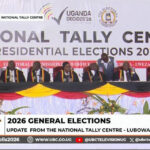
The Electoral Commission on Saturday (January 17) has released the 2026 Uganda presidential election results. Shortly after 4pm, EC chairperson Justice Simon Byabakama delivered the...
President Yoweri Kaguta Museveni

President Yoweri Museveni Wins Seventh Term: Electoral Commission

0
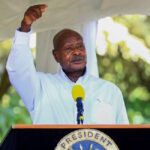
Uganda’s President Yoweri Museveni has been re-elected to a seventh term, the Electoral Commission has announced. Museveni, 81, won with 71.65 percent of the vote,...
Kyagulanyi Ssentamu Campaigns in Kisoro

NUP’s Kyagulanyi Decries Slow Pace of Development in Kisoro and Rubanda

0
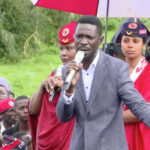
The NUP Presidential Candidate Robert Kyagulanyi has campaigned in Kisoro and Rubanda Districts of Western Uganda. He started the day with a radio talk...

Registered Political Parties

0
As of September 2025, the Uganda Electoral Commission lists 26 registered political parties on its website. Some of the listed parties include the following:

Forum for Democratic Change (FDC)

0
The Forum for Democratic Change (FDC), founded on December 16, 2004, is one of the top opposition parties in Uganda. FDC was founded as an...

President Museveni Campaigns in Adjuman

0
EC does not rig for me Museveni also commented on concerns by the Opposition that the Independent Electoral Commission is biased. Museveni said that although he...

Nominations: EC Outlines Guidelines for Candidates

0
The Electoral Commission on Tuesday issued fresh guidelines for the process of the nomination of candidates for the Parliamentary elections that starts today. Candidates heading for nominations...